


- Afhalen na 1 uur in een winkel met voorraad
- Gratis thuislevering in België vanaf € 30
- Ruim aanbod met 7 miljoen producten
- Afhalen na 1 uur in een winkel met voorraad
- Gratis thuislevering in België vanaf € 30
- Ruim aanbod met 7 miljoen producten





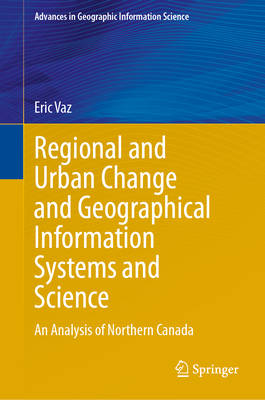
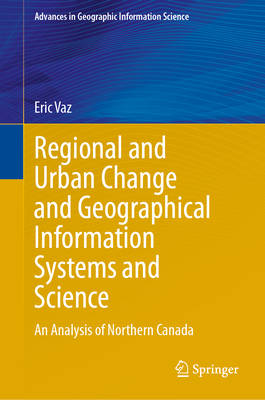
Regional and Urban Change and Geographical Information Systems and Science
An Analysis of Northern Canada
Eric Vaz
€ 173,45
+ 346 punten
Uitvoering
Omschrijving
This volume offers an interdisciplinary, spatially grounded analysis of Northern Canada--centring the territories of Yukon, the Northwest Territories, and Nunavut, and the broader geography of Inuit Nunangat--to show how climate change, infrastructure, governance, and cultural continuity co-produce northern development outcomes. Rather than treating the North as a uniform periphery, the book foregrounds spatial heterogeneity in exposure, vulnerability, and adaptive capacity, demonstrating how "wicked problems" emerge through interconnected systems of mobility, services, food procurement, and ecological transformation. It combines GIScience, regional science, and spatial analysis to translate complex realities into decision-relevant insight, including approaches spanning remote sensing, spatial vulnerability assessment, and network-based measures of connectivity. Across the chapters, the volume examines Arctic urbanization and institutional "anchoring," vegetation regime shifts such as shrubification, food scarcity and Inuit food sovereignty in Nunavut, health and service accessibility under digital constraints, environmental monitoring and decision support, and the structural fragmentation of transportation networks--where many Nunavut communities remain effectively road-isolated beyond the immediate settlement footprint. It also positions heritage preservation, Indigenous knowledge systems, and Indigenous data sovereignty as central, rather than ancillary, to resilience planning. The concluding synthesis advances "spatial intelligence" beyond mapping: an integrative framework for equity, resilience, and sovereignty in Northern Canada.
Specificaties
Betrokkenen
- Auteur(s):
- Uitgeverij:
Inhoud
- Aantal bladzijden:
- 184
- Taal:
- Engels
- Reeks:
Eigenschappen
- Productcode (EAN):
- 9783032192103
- Verschijningsdatum:
- 29/05/2026
- Uitvoering:
- Hardcover
- Formaat:
- Genaaid
- Afmetingen:
- 155 mm x 235 mm


Alleen bij Standaard Boekhandel
+ 346 punten op je klantenkaart van Standaard Boekhandel
Cadeau

AANGERADEN


Beoordelingen
We publiceren alleen reviews die voldoen aan de voorwaarden voor reviews. Bekijk onze voorwaarden voor reviews.