


- Afhalen na 1 uur in een winkel met voorraad
- Gratis thuislevering in België vanaf € 30
- Ruim aanbod met 7 miljoen producten
- Afhalen na 1 uur in een winkel met voorraad
- Gratis thuislevering in België vanaf € 30
- Ruim aanbod met 7 miljoen producten





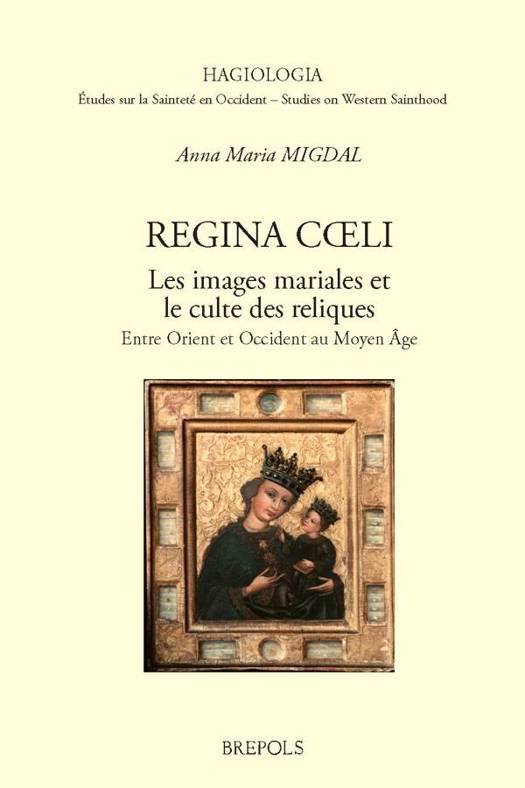
Regina Cœli. Les images mariales et le culte des reliques
Entre Orient et Occident au Moyen Âge
Anna Maria Migdal
€ 111,30
+ 222 punten
Omschrijving
Scholarly investigation of devotional images from the medieval period has never explored, in a European context, the question of Marian paintings functioning as portable relics. The model of the picture-reliquary a single, diptych, or triptych panel comprising the portrait of the Virgin and Child painted on wood (or, more rarely, on gilded glass, verre eglomise) set in a large framework encrusted with relics (occasionally with precious stones) was particularly widespread in the territory of Little Poland from c. 1420. Polish reliquaries, known until the beginning of the sixteenth century, should be considered as an adaptation of iconic types and forms of Byzantine provenance, which were reinterpreted in the painting of the Italian Trecento. Of particular note is the Siennese model of the portable Marian altar piece made popular from the 1330s-40s. From the comparative study of the works, concerning their similarities and their antiquity, one envisages the advent of such a formal concept in Poland either directly from Italy, or by the intermediary of Bohemia. The diffusion of picture-reliquaries, typical of Tuscan art, forms part of the general movement toward a renewal of piety in central Europe in the fifteenth century, the devotio moderna. As a result, alongside singular representations, especially venerated in the course of liturgical or paraliturgical offices, one sees less costly reliquaries spread in private space. Appreciated in the intimate setting of convents - Franciscan and Dominican - as well as that of the daily life of the laity, these relics were used as domestic altars or as folding altars for travel. These images of religious affection constitute an artistic phenomenon of the late Middle Ages. And, several similar reliquaries known later do not guarantee a veritable continuity of the ancient model to the modern era.
Specificaties
Betrokkenen
- Auteur(s):
- Uitgeverij:
Inhoud
- Aantal bladzijden:
- 450
- Taal:
- Frans
- Reeks:
- Reeksnummer:
- nr. 12
Eigenschappen
- Productcode (EAN):
- 9782503568584
- Verschijningsdatum:
- 24/03/2017
- Uitvoering:
- Hardcover
- Formaat:
- Genaaid
- Afmetingen:
- 165 mm x 239 mm
- Gewicht:
- 938 g


Alleen bij Standaard Boekhandel
+ 222 punten op je klantenkaart van Standaard Boekhandel
Cadeau

AANGERADEN


Beoordelingen
We publiceren alleen reviews die voldoen aan de voorwaarden voor reviews. Bekijk onze voorwaarden voor reviews.