


- Afhalen na 1 uur in een winkel met voorraad
- Gratis thuislevering in België vanaf € 30
- Ruim aanbod met 7 miljoen producten
- Afhalen na 1 uur in een winkel met voorraad
- Gratis thuislevering in België vanaf € 30
- Ruim aanbod met 7 miljoen producten




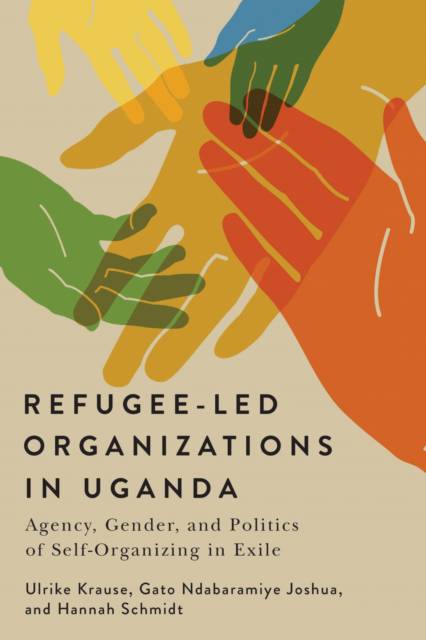
Refugee-Led Organizations in Uganda
Agency, Gender, and Politics of Self-Organizing in Exile Volume 26
Ulrike Krause, Gato Ndabaramiye Joshua, Hannah Schmidt
€ 49,95
+ 99 punten
Omschrijving
Self-organization plays an essential yet often overlooked role in the everyday lives of refugees in exile. By self-organizing, they challenge restrictions, claim political representation, foster social relations and belonging, and create ongoing economic opportunities. While government authorities and aid organizations are supposed to provide protection and assistance, refugees often continue to face adversities, restrictions, and risks, prompting them to establish and maintain their own support systems. Refugee-Led Organizations in Uganda offers nuanced insight into the problems arising from the aid system and especially the significance of the spectrum of informal and formalized self-organizations. Ulrike Krause, Gato Ndabaramiye Joshua, and Hannah Schmidt draw on a gender-sensitive understanding of relational agency and situated knowledge and use empirical research in Uganda's camp Kyaka II and the capital, Kampala, to reveal how individuals collectively contribute to their own support in times of emergency and in everyday life. Interwoven with reflections written by refugees in Uganda - Bengekya Mugay Gédéon, Noella Kabale, Paul, Janvier Hafasha, and Isreal Katembo, as well as the director of an LGBTQ+ refugee-led organization - the book centres on individuals' lived experiences of self-organization in exile.
Specificaties
Betrokkenen
- Auteur(s):
- Uitgeverij:
Inhoud
- Aantal bladzijden:
- 348
- Taal:
- Engels
- Reeks:
Eigenschappen
- Productcode (EAN):
- 9780228026952
- Verschijningsdatum:
- 14/04/2026
- Uitvoering:
- Paperback
- Formaat:
- Trade paperback (VS)
- Afmetingen:
- 152 mm x 229 mm
- Gewicht:
- 453 g



Alleen bij Standaard Boekhandel
+ 99 punten op je klantenkaart van Standaard Boekhandel
Cadeau

AANGERADEN


Beoordelingen
We publiceren alleen reviews die voldoen aan de voorwaarden voor reviews. Bekijk onze voorwaarden voor reviews.