


- Afhalen na 1 uur in een winkel met voorraad
- Gratis thuislevering in België vanaf € 30
- Ruim aanbod met 7 miljoen producten
- Afhalen na 1 uur in een winkel met voorraad
- Gratis thuislevering in België vanaf € 30
- Ruim aanbod met 7 miljoen producten





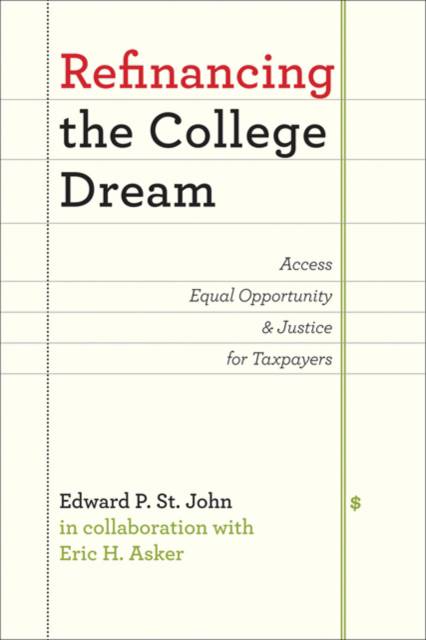
Refinancing the College Dream
Access, Equal Opportunity, and Justice for Taxpayers
Edward P St John
Paperback | Engels
€ 57,95
+ 115 punten
Eenvoudig bestellen
Veilig betalen


Gratis thuislevering vanaf € 30 (via bpost)
Gratis levering in je Standaard Boekhandel
Omschrijving
During the 1990s, rising tuition costs and inadequate federal grant aid prevented more than a million otherwise qualified, low-income students from continuing their education past high school. Education policy expert Edward P. St. John is troubled by this situation and argues that equal access to higher education is both feasible and just. In Refinancing the College Dream, he examines recent trends in public funding of education and explores alternatives to financing which would provide equal access to postsecondary education for all Americans. The growing gap in the rate of participation in higher education for low-income groups compared to upper-income groups over the past three decades, St. John finds, has been a direct result of the decreased availability of federal grants, even after taking into account such factors as an increased emphasis on strengthening high school graduation requirements. To reverse this trend, he suggests that policymakers refocus the debate over the public financing of higher education from taxpayer costs to principles of social responsibility and justice, along with economic theories of human capital. He then shows how improved coordination between state and federal agencies, expanded use of loans, and better targeting of grant aid can maximize access for low-income students while minimizing increases in taxes. Making higher education accessible to low-income students is one of the crucial challenges for citizens and policymakers in the early twenty-first century. Refinancing the College Dream offers a theoretical and practical foundation for boldly rethinking the financial strategies used by colleges and universities, states, and the federal government to accomplish this essential goal.
Specificaties
Betrokkenen
- Auteur(s):
- Uitgeverij:
Inhoud
- Aantal bladzijden:
- 272
- Taal:
- Engels
Eigenschappen
- Productcode (EAN):
- 9781421415789
- Verschijningsdatum:
- 11/07/2014
- Uitvoering:
- Paperback
- Formaat:
- Trade paperback (VS)
- Afmetingen:
- 152 mm x 229 mm
- Gewicht:
- 403 g


Alleen bij Standaard Boekhandel
+ 115 punten op je klantenkaart van Standaard Boekhandel
CADEAU

AANGERADEN


Beoordelingen
We publiceren alleen reviews die voldoen aan de voorwaarden voor reviews. Bekijk onze voorwaarden voor reviews.