


- Afhalen na 1 uur in een winkel met voorraad
- Gratis thuislevering in België vanaf € 30
- Ruim aanbod met 7 miljoen producten
- Afhalen na 1 uur in een winkel met voorraad
- Gratis thuislevering in België vanaf € 30
- Ruim aanbod met 7 miljoen producten





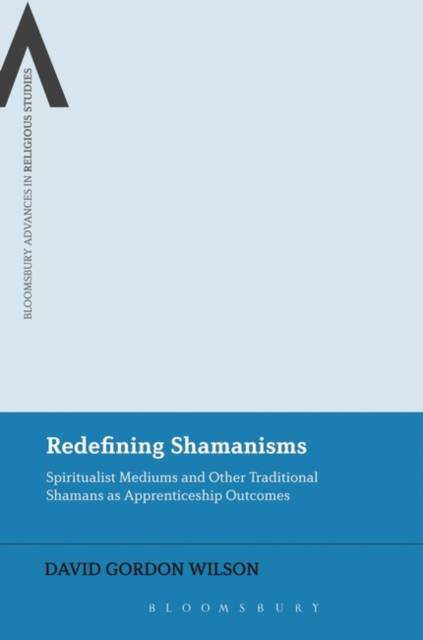
Redefining Shamanisms
Spiritualist Mediums and Other Traditional Shamans as Apprenticeship Outcomes
David Gordon Wilson
€ 89,95
+ 179 punten
Uitvoering
Omschrijving
Spiritualism and mediumship are often regarded as the product of lingering superstition in the Victorian era, and as having limited relevance in modern Anglo-American society. Scholarship to date which has considered Spiritualism as a distinct religious tradition has focussed on analysing the phenomenon in terms of spirit possession only.
This volume analyses the development of shamanism (communication with the spiritual world) as a concept within North American English-speaking scholarship, with particular focus on Mircea Eliade's influential cross-cultural presentation of shamanism. By re-examining the work of Sergei Shirokogoroff, one of Eliade's principal sources, the traditional Evenki shamanic apprenticeship is compared and identified with the new Spiritualist apprenticeship.The author demonstrates that Spiritualism is best understood as a traditional shamanism, as distinct from contemporary appropriations or neo-shamanisms. He argues that shamanism is the outcome of an apprenticeship in the management of psychic experiences, and which follows the same pattern as that of the apprentice medium. In doing so, the author offers fresh insights into the mechanisms that are key to sustaining mediumship as a social institution.
Specificaties
Betrokkenen
- Auteur(s):
- Uitgeverij:
Inhoud
- Aantal bladzijden:
- 272
- Taal:
- Engels
- Reeks:
Eigenschappen
- Productcode (EAN):
- 9781472579041
- Verschijningsdatum:
- 31/07/2014
- Uitvoering:
- Paperback
- Formaat:
- Trade paperback (VS)
- Afmetingen:
- 156 mm x 234 mm
- Gewicht:
- 385 g


Alleen bij Standaard Boekhandel
+ 179 punten op je klantenkaart van Standaard Boekhandel
Cadeau

AANGERADEN


Beoordelingen
We publiceren alleen reviews die voldoen aan de voorwaarden voor reviews. Bekijk onze voorwaarden voor reviews.