



Bedankt voor het vertrouwen het afgelopen jaar! Om jou te bedanken bieden we GRATIS verzending (in België) aan op alles gedurende de hele maand januari.
- Afhalen na 1 uur in een winkel met voorraad
- In januari gratis thuislevering in België
- Ruim aanbod met 7 miljoen producten
Bedankt voor het vertrouwen het afgelopen jaar! Om jou te bedanken bieden we GRATIS verzending (in België) aan op alles gedurende de hele maand januari.
- Afhalen na 1 uur in een winkel met voorraad
- In januari gratis thuislevering in België
- Ruim aanbod met 7 miljoen producten





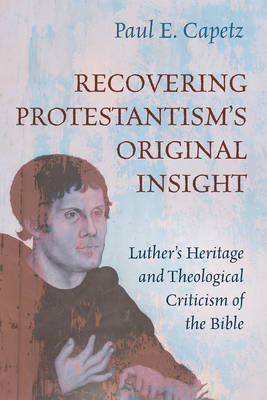
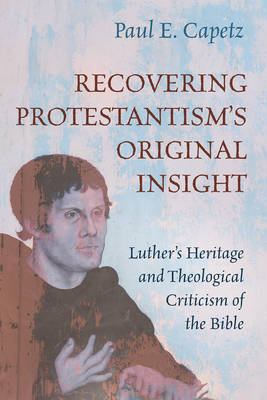
Recovering Protestantism's Original Insight
Luther's Heritage and Theological Criticism of the Bible
Paul E Capetz
Paperback | Engels
€ 36,45
+ 72 punten
Omschrijving
In this engaging volume, Capetz argues that Protestants have largely ignored Luther's heritage when it comes to thinking about biblical authority and instead have followed Calvin's biblicism, leading to many intellectual and moral problems in the face of a fully historical-critical understanding of the Bible in our time. After prefacing the book with a personal story that illustrates what is at stake in this question for the church's pastoral ministry, he examines in detail the debate between Barth--an heir of Calvin--and Bultmann--a Lutheran--regarding Sachkritik or "content criticism" of Scripture since their debate serves to clarify the central issue facing Protestants today. He then traces their debate back to the Reformation itself to show how the difference between Luther and Calvin presented Protestants from the outset with two conflicting models of biblical authority. He then reflects on how this question of the proper understanding of biblical authority manifests itself in the debates over sexual ethics that have plagued mainline denominations for the past four decades. And he concludes by arguing that Luther's heritage provides Protestants with a viable way to engage in a robust theological interpretation of the Bible that does not violate what historical criticism has taught us about it.
Specificaties
Betrokkenen
- Auteur(s):
- Uitgeverij:
Inhoud
- Aantal bladzijden:
- 190
- Taal:
- Engels
Eigenschappen
- Productcode (EAN):
- 9781666737479
- Verschijningsdatum:
- 20/04/2023
- Uitvoering:
- Paperback
- Formaat:
- Trade paperback (VS)
- Afmetingen:
- 152 mm x 229 mm
- Gewicht:
- 290 g


Alleen bij Standaard Boekhandel
+ 72 punten op je klantenkaart van Standaard Boekhandel
SOLDEN


Beoordelingen
We publiceren alleen reviews die voldoen aan de voorwaarden voor reviews. Bekijk onze voorwaarden voor reviews.