


- Afhalen na 1 uur in een winkel met voorraad
- Gratis thuislevering in België vanaf € 30
- Ruim aanbod met 7 miljoen producten
- Afhalen na 1 uur in een winkel met voorraad
- Gratis thuislevering in België vanaf € 30
- Ruim aanbod met 7 miljoen producten





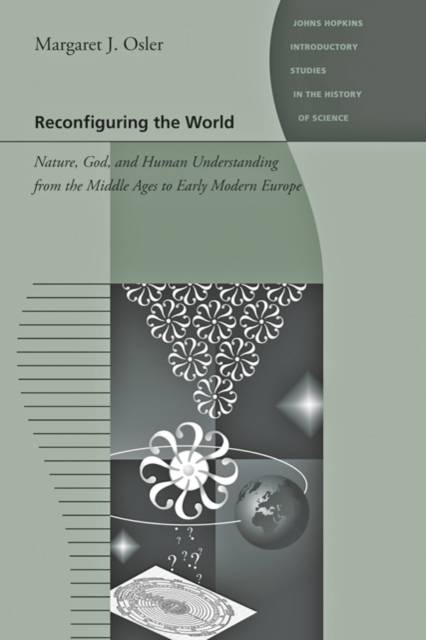
Reconfiguring the World
Nature, God, and Human Understanding from the Middle Ages to Early Modern Europe
Margaret J Osler
€ 49,95
+ 99 punten
Omschrijving
Change in human understanding of the natural world during the early modern period marks one of the most important episodes in intellectual history. This era is often referred to as the scientific revolution, but recent scholarship has challenged traditional accounts. Here, in Reconfiguring the World, Margaret J. Osler treats the development of the sciences in Europe from the early sixteenth to the late seventeenth centuries as a complex and multifaceted process. The worldview embedded in modern science is a relatively recent development. Osler aims to convey a nuanced understanding of how the natural world looked to early modern thinkers such as Galileo, Descartes, Boyle, and Newton. She describes investigation and understanding of the natural world in terms that the thinkers themselves would have used. Tracing the views of the natural world to their biblical, Greek, and Arabic sources, Osler demonstrates the impact of the Renaissance recovery of ancient texts, printing, the Protestant Reformation, and the exploration of the New World. She shows how the traditional disciplinary boundaries established by Aristotle changed dramatically during this period and finds the tensions of science and religion expressed as differences between natural philosophy and theology. Far from a triumphalist account, Osler's story includes false starts and dead ends. Ultimately, she shows how a few gifted students of nature changed the way we see ourselves and the universe.
Specificaties
Betrokkenen
- Auteur(s):
- Uitgeverij:
Inhoud
- Aantal bladzijden:
- 200
- Taal:
- Engels
- Reeks:
Eigenschappen
- Productcode (EAN):
- 9780801896569
- Verschijningsdatum:
- 19/08/2010
- Uitvoering:
- Paperback
- Formaat:
- Trade paperback (VS)
- Afmetingen:
- 150 mm x 226 mm
- Gewicht:
- 272 g



Alleen bij Standaard Boekhandel
+ 99 punten op je klantenkaart van Standaard Boekhandel
Cadeau

AANGERADEN


Beoordelingen
We publiceren alleen reviews die voldoen aan de voorwaarden voor reviews. Bekijk onze voorwaarden voor reviews.