


- Afhalen na 1 uur in een winkel met voorraad
- Gratis thuislevering in België vanaf € 30
- Ruim aanbod met 7 miljoen producten
- Afhalen na 1 uur in een winkel met voorraad
- Gratis thuislevering in België vanaf € 30
- Ruim aanbod met 7 miljoen producten




Omschrijving
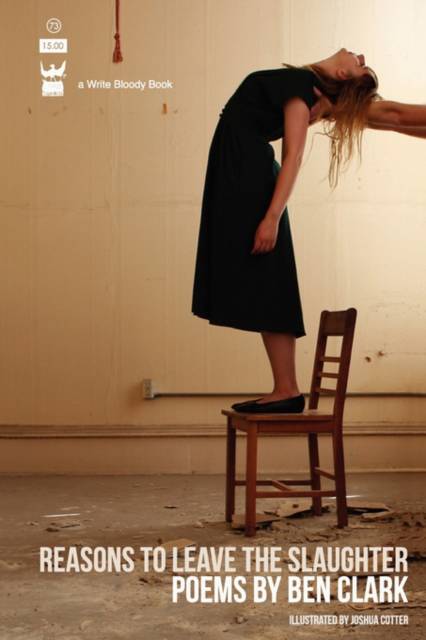
Clark's collection tells of the balance between our desperate human need to own a place and call it home, and nature's constant battling back with infestations, tornados, an animal's unforeseen death.
"...the sadness hibernating in my body, like a family of bears that will not survive the summer months."-- from "Summer"
Reasons to Leave the Slaughter will lure you in with stories that call for imaginative romps through the pastures, down to the pond, or up the perfect climbing tree. It is a place of broken limbs, jealousies flaring up between brothers, unwieldy advice handed down from a father, poverty, and love found then lost again.
The collection speaks of the balance between our desperate human need to own a place and call it home, and nature's constant battling back with infestations, tornados crumpling new buildings into dust, an animal's unforeseen death. Told through numerous voices, young and old, male and female, human or animal, these poems give enough space and time to allow the fantastic to take up equal residence alongside reality.
Think of Marquez and Murakami's magic. Think of Li-Young Lee's simple quiet elegance. Think of James Wright's earthiness. Think of Richard Siken's honest violent passion. This book revels in all of this, in youthful discovery, in the hopes and despairs of those growing old without seeming purpose, in the ever-present balance between beauty and brutality.
"...the sadness hibernating in my body, like a family of bears that will not survive the summer months."-- from "Summer"
Reasons to Leave the Slaughter will lure you in with stories that call for imaginative romps through the pastures, down to the pond, or up the perfect climbing tree. It is a place of broken limbs, jealousies flaring up between brothers, unwieldy advice handed down from a father, poverty, and love found then lost again.
The collection speaks of the balance between our desperate human need to own a place and call it home, and nature's constant battling back with infestations, tornados crumpling new buildings into dust, an animal's unforeseen death. Told through numerous voices, young and old, male and female, human or animal, these poems give enough space and time to allow the fantastic to take up equal residence alongside reality.
Think of Marquez and Murakami's magic. Think of Li-Young Lee's simple quiet elegance. Think of James Wright's earthiness. Think of Richard Siken's honest violent passion. This book revels in all of this, in youthful discovery, in the hopes and despairs of those growing old without seeming purpose, in the ever-present balance between beauty and brutality.
Specificaties
Betrokkenen
- Auteur(s):
- Illustrator(s):
- Uitgeverij:
Inhoud
- Aantal bladzijden:
- 90
- Taal:
- Engels
Eigenschappen
- Productcode (EAN):
- 9781935904328
- Verschijningsdatum:
- 5/05/2011
- Uitvoering:
- Paperback
- Formaat:
- Trade paperback (VS)
- Afmetingen:
- 150 mm x 224 mm
- Gewicht:
- 181 g


Alleen bij Standaard Boekhandel
+ 58 punten op je klantenkaart van Standaard Boekhandel

Beoordelingen
We publiceren alleen reviews die voldoen aan de voorwaarden voor reviews. Bekijk onze voorwaarden voor reviews.