


- Afhalen na 1 uur in een winkel met voorraad
- Gratis thuislevering in België vanaf € 30
- Ruim aanbod met 7 miljoen producten
- Afhalen na 1 uur in een winkel met voorraad
- Gratis thuislevering in België vanaf € 30
- Ruim aanbod met 7 miljoen producten





Omschrijving
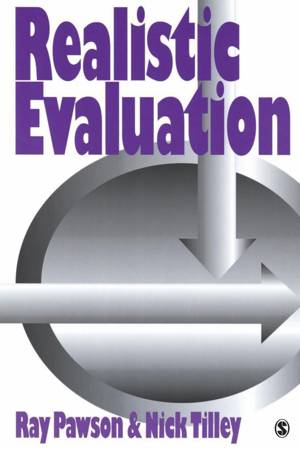
Authors Ray Pawson and Nick Tilley show how program evaluation needs to be and can be bettered. The authors present a profound and highly readable critique of current evaluation practice introducing a manifesto- and handbook-fresh approach. This volume is devoted to articulating a new evaluation paradigm, which promises greater validity and utility for evaluation as a whole. Realistic Evaluation reflects the paradigmÆs foundation in scientific realist philosophy and its commitment to the idea that programs deal with real problems rather than mere social constructions. Its primary intention is to inform realistic developments in policyùmaking that benefit program participants and the public. Pawson and Tilley argue persuasively and passionately that scientific evaluation requires a careful blend of theory and method, quality and quantity, ambition and realism. The book offers a complete blueprint for evaluation activities, covering design to data collection and analysis to the accumulation of findings across programs and onto the realization of research into policy. Practical examples are used throughout this powerful volume and are grounded in the major fields of program evaluation. Realistic Evaluation is essential reading for all those involved in the evaluation process, especially researchers, scholars, and students in sociology, social policy, criminology, health, and education.
Specificaties
Betrokkenen
- Auteur(s):
- Uitgeverij:
Inhoud
- Aantal bladzijden:
- 256
- Taal:
- Engels
Eigenschappen
- Productcode (EAN):
- 9780761950097
- Verschijningsdatum:
- 23/06/1997
- Uitvoering:
- Paperback
- Formaat:
- Trade paperback (VS)
- Afmetingen:
- 163 mm x 234 mm
- Gewicht:
- 390 g


Alleen bij Standaard Boekhandel
+ 165 punten op je klantenkaart van Standaard Boekhandel
CADEAU

AANGERADEN


Beoordelingen
We publiceren alleen reviews die voldoen aan de voorwaarden voor reviews. Bekijk onze voorwaarden voor reviews.