


- Afhalen na 1 uur in een winkel met voorraad
- Gratis thuislevering in België vanaf € 30
- Ruim aanbod met 7 miljoen producten
- Afhalen na 1 uur in een winkel met voorraad
- Gratis thuislevering in België vanaf € 30
- Ruim aanbod met 7 miljoen producten





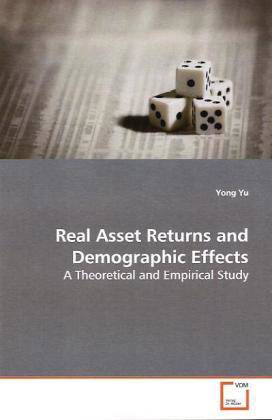
Real Asset Returns and Demographic Effects
A Theoretical and Empirical Study
Yong Yu
Paperback | Engels
€ 94,45
+ 188 punten
Omschrijving
This book examines the relation between demographic
factors and real asset returns, which has received
little attention. We begin by discussing the
implications of major growth models for this
relationship. Then we propose a model to derive the
testable equations which show us the explicit
relation. Our results show that real asset returns
are fairly significantly and positively affected by
population growth, especially when the sample period
is extended and long horizon span methods are used,
although the size and power of the effect vary among
samples and assets. We find the key channel through
which demographics affect asset returns is the
capital dilution caused by the population growth
with the evidence from a cross section sample of
forty-three countries and regions. Our results
demonstrate the importance of examining the
relationship between demographic variables and asset
returns for economic policies and its role in the
business cycle and other areas. The book will
appeal to policy makers, researchers, and
professionals interested in theoretical, applied,
and policy issues related of demographics effects on
financial markets.
factors and real asset returns, which has received
little attention. We begin by discussing the
implications of major growth models for this
relationship. Then we propose a model to derive the
testable equations which show us the explicit
relation. Our results show that real asset returns
are fairly significantly and positively affected by
population growth, especially when the sample period
is extended and long horizon span methods are used,
although the size and power of the effect vary among
samples and assets. We find the key channel through
which demographics affect asset returns is the
capital dilution caused by the population growth
with the evidence from a cross section sample of
forty-three countries and regions. Our results
demonstrate the importance of examining the
relationship between demographic variables and asset
returns for economic policies and its role in the
business cycle and other areas. The book will
appeal to policy makers, researchers, and
professionals interested in theoretical, applied,
and policy issues related of demographics effects on
financial markets.
Specificaties
Betrokkenen
- Auteur(s):
- Uitgeverij:
Inhoud
- Aantal bladzijden:
- 168
- Taal:
- Engels
Eigenschappen
- Productcode (EAN):
- 9783639170825
- Verschijningsdatum:
- 25/06/2009
- Uitvoering:
- Paperback
- Afmetingen:
- 152 mm x 220 mm
- Gewicht:
- 254 g


Alleen bij Standaard Boekhandel
+ 188 punten op je klantenkaart van Standaard Boekhandel
Cadeau

AANGERADEN


Beoordelingen
We publiceren alleen reviews die voldoen aan de voorwaarden voor reviews. Bekijk onze voorwaarden voor reviews.