


- Afhalen na 1 uur in een winkel met voorraad
- Gratis thuislevering in België vanaf € 30
- Ruim aanbod met 7 miljoen producten
- Afhalen na 1 uur in een winkel met voorraad
- Gratis thuislevering in België vanaf € 30
- Ruim aanbod met 7 miljoen producten





€ 89,95
+ 179 punten
Uitvoering
Omschrijving
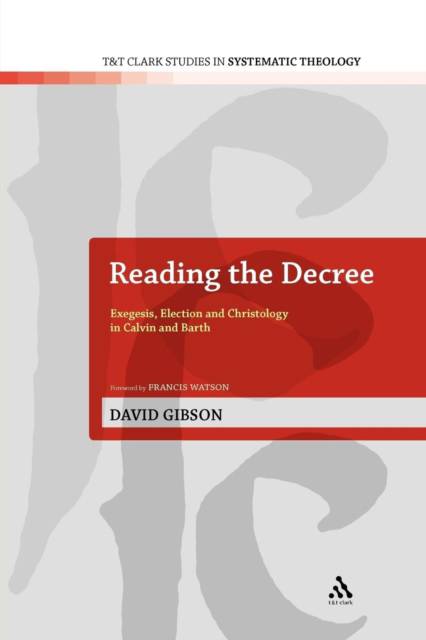
What role does the interpretation of Scripture play in theological construction? In Reading the Decree David Gibson examines the exegesis of election in John Calvin and Karl Barth, and considers the relationship between election and Christology in their thought. He argues that for both Calvin and Barth their doctrine of election and its exegetical moorings are christologically shaped, but in significantly different ways.
Building on Richard A. Muller's conceptual distinction between Calvin's soteriological christocentrism and Barth's principial christocentrism, Gibson carefully explores their exegesis of the topics of Christ and election, and the election of Israel and the church. This distinction is then further developed by showing how it has a corresponding hermeneutical form: extensive christocentrism (Calvin) and intensive christocentrism (Barth). By focussing on the reception of biblical texts Reading the Decree draws attention to the neglected exegetical foundations of Calvin's doctrine of election, and makes a fresh contribution to current debates over election in Barth's thought. The result is a study which will be of interest to biblical scholars, as well as historical and systematic theologians alike.Specificaties
Betrokkenen
- Auteur(s):
- Uitgeverij:
Inhoud
- Aantal bladzijden:
- 240
- Taal:
- Engels
- Reeks:
- Reeksnummer:
- nr. 4
Eigenschappen
- Productcode (EAN):
- 9780567129178
- Verschijningsdatum:
- 5/01/2012
- Uitvoering:
- Paperback
- Formaat:
- Trade paperback (VS)
- Afmetingen:
- 156 mm x 234 mm
- Gewicht:
- 335 g


Alleen bij Standaard Boekhandel
+ 179 punten op je klantenkaart van Standaard Boekhandel
Cadeau

AANGERADEN


Beoordelingen
We publiceren alleen reviews die voldoen aan de voorwaarden voor reviews. Bekijk onze voorwaarden voor reviews.