


- Afhalen na 1 uur in een winkel met voorraad
- Gratis thuislevering in België vanaf € 30
- Ruim aanbod met 7 miljoen producten
- Afhalen na 1 uur in een winkel met voorraad
- Gratis thuislevering in België vanaf € 30
- Ruim aanbod met 7 miljoen producten





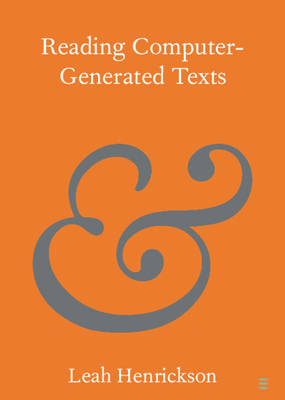
Reading Computer-Generated Texts
Leah Henrickson
€ 27,45
+ 54 punten
Eenvoudig bestellen
Veilig betalen


Gratis thuislevering vanaf € 30 (via bpost)
Gratis levering in je Standaard Boekhandel
Omschrijving
Natural language generation (NLG) is the process wherein computers produce output in readable human languages. Such output takes many forms, including news articles, sports reports, prose fiction, and poetry. These computer-generated texts are often indistinguishable from human-written texts, and they are increasingly prevalent. NLG is here, and it is everywhere. However, readers are often unaware that what they are reading has been computer-generated. This Element considers how NLG conforms to and confronts traditional understandings of authorship and what it means to be a reader. It argues that conventional conceptions of authorship, as well as of reader responsibility, change in instances of NLG. What is the social value of a computer-generated text? What does NLG mean for modern writing, publishing, and reading practices? Can an NLG system be considered an author? This Element explores such question, while presenting a theoretical basis for future studies.
Specificaties
Betrokkenen
- Auteur(s):
- Uitgeverij:
Inhoud
- Aantal bladzijden:
- 100
- Taal:
- Engels
- Reeks:
Eigenschappen
- Productcode (EAN):
- 9781108822862
- Verschijningsdatum:
- 11/02/2021
- Uitvoering:
- Paperback
- Formaat:
- Trade paperback (VS)
- Afmetingen:
- 127 mm x 178 mm
- Gewicht:
- 95 g


Alleen bij Standaard Boekhandel
+ 54 punten op je klantenkaart van Standaard Boekhandel
CADEAU

AANGERADEN


Beoordelingen
We publiceren alleen reviews die voldoen aan de voorwaarden voor reviews. Bekijk onze voorwaarden voor reviews.