



- Afhalen na 1 uur in een winkel met voorraad
- In januari gratis thuislevering in België
- Ruim aanbod met 7 miljoen producten
- Afhalen na 1 uur in een winkel met voorraad
- In januari gratis thuislevering in België
- Ruim aanbod met 7 miljoen producten





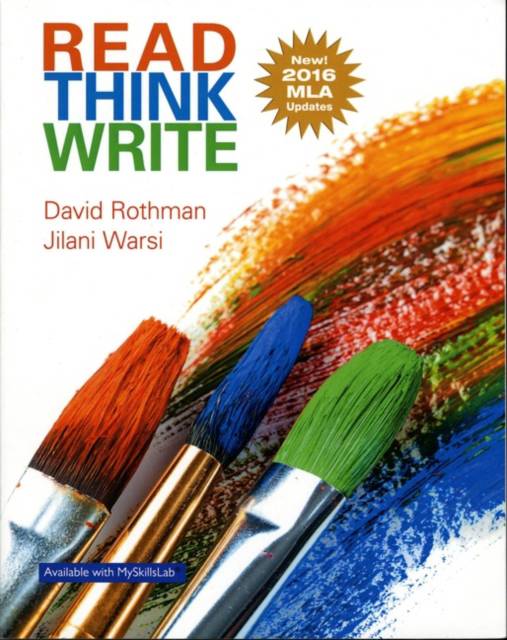
Read Think Write
True Integration Through Academic Content, MLA Update
David Rothman, Jilani Warsi
Paperback | Engels
€ 181,45
+ 362 punten
Omschrijving
For intermediate-level courses in Integrated Reading and Writing. This version of Read Think Write: True Integration Through Academic Content has been updated to reflect the 8th Edition of the MLA Handbook (April 2016)*
A meaningful, content-driven approach to integrated reading and writing proficiency Read Think Write: True Integration Through Academic Content helps students develop the skills they need to achieve success in all subsequent academic courses.
The authors start with an introduction to the reading, thinking, and writing processes and a detailed discussion of how students can get the most out of the text. Subsequent chapters are organized thematically, each covering an academic content area. This provides students with an immersive learning experience by building their academic vocabulary and enabling them to develop and pursue academic interests.
Each discipline chapter culminates with an essay assignment that asks students to integrate skills they've learned in the chapter and ideas from the other chapter readings. Students apply these skills by reading actively, thinking about and evaluating text, identifying the topics, main ideas, and details, making inferences, and recognizing key patterns of organization and translating these reading skills into their writing equivalents to write thoughtful, effective essays.
* The 8th Edition introduces sweeping changes to the philosophy and details of MLA works cited entries. Responding to the "increasing mobility of texts," MLA now encourages writers to focus on the process of crafting the citation, beginning with the same questions for any source. These changes, then, align with current best practices in the teaching of writing which privilege inquiry and critical thinking over rote recall and rule-following.
A meaningful, content-driven approach to integrated reading and writing proficiency Read Think Write: True Integration Through Academic Content helps students develop the skills they need to achieve success in all subsequent academic courses.
The authors start with an introduction to the reading, thinking, and writing processes and a detailed discussion of how students can get the most out of the text. Subsequent chapters are organized thematically, each covering an academic content area. This provides students with an immersive learning experience by building their academic vocabulary and enabling them to develop and pursue academic interests.
Each discipline chapter culminates with an essay assignment that asks students to integrate skills they've learned in the chapter and ideas from the other chapter readings. Students apply these skills by reading actively, thinking about and evaluating text, identifying the topics, main ideas, and details, making inferences, and recognizing key patterns of organization and translating these reading skills into their writing equivalents to write thoughtful, effective essays.
* The 8th Edition introduces sweeping changes to the philosophy and details of MLA works cited entries. Responding to the "increasing mobility of texts," MLA now encourages writers to focus on the process of crafting the citation, beginning with the same questions for any source. These changes, then, align with current best practices in the teaching of writing which privilege inquiry and critical thinking over rote recall and rule-following.
Specificaties
Betrokkenen
- Auteur(s):
- Uitgeverij:
Inhoud
- Aantal bladzijden:
- 512
- Taal:
- Engels
Eigenschappen
- Productcode (EAN):
- 9780134678818
- Verschijningsdatum:
- 30/01/2017
- Uitvoering:
- Paperback
- Formaat:
- Trade paperback (VS)
- Afmetingen:
- 201 mm x 251 mm
- Gewicht:
- 635 g


Alleen bij Standaard Boekhandel
+ 362 punten op je klantenkaart van Standaard Boekhandel
Cadeau

AANGERADEN


Beoordelingen
We publiceren alleen reviews die voldoen aan de voorwaarden voor reviews. Bekijk onze voorwaarden voor reviews.