


- Afhalen na 1 uur in een winkel met voorraad
- Gratis thuislevering in België vanaf € 30
- Ruim aanbod met 7 miljoen producten
- Afhalen na 1 uur in een winkel met voorraad
- Gratis thuislevering in België vanaf € 30
- Ruim aanbod met 7 miljoen producten





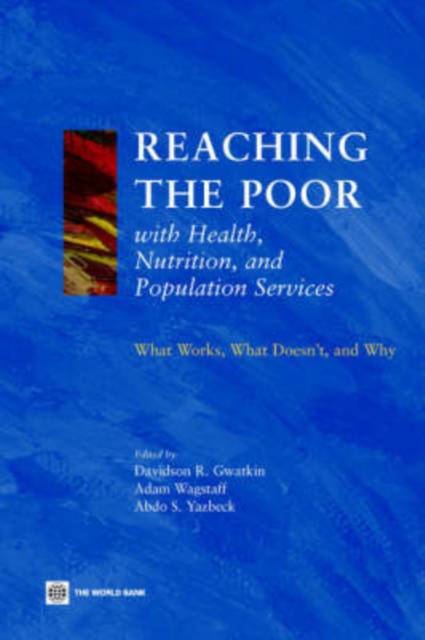
Reaching the Poor with Health, Nutrition, and Population Services
What Works, What Doesn't, and Why
Davidson R Gwatkin, Adam Wagstaff, Abdo S Yazbeck
Paperback | Engels
€ 46,95
+ 93 punten
Omschrijving
This volume presents eleven case studies that document how well or poorly health, nutrition, and population programs have reached disadvantaged groups in the countries of Africa, Asia, and Latin America where they were undertaken. The studies were commissioned by the Reaching the Poor Program, undertaken by the Word Bank in cooperation with the Bill and Melinda Gates Foundation and the Dutch and Swedish governments, in an effort to find better ways of ensuring that health, nutrition, and population programs benefit the neediest. These case studies, reinforced by other material gathered by the Reaching the Poor Program, indicate clearly that health programs do not have to be inequitable. Although most health, nutrition, and population services achieve much lower coverage among disadvantaged groups than among the better-off, many significant and instructive exceptions exist. These show that the poor can be reached much more effectively than at present and point to potentially promising strategies for doing so.
Specificaties
Betrokkenen
- Auteur(s):
- Uitgeverij:
Inhoud
- Aantal bladzijden:
- 376
- Taal:
- Engels
Eigenschappen
- Productcode (EAN):
- 9780821359617
- Verschijningsdatum:
- 29/08/2005
- Uitvoering:
- Paperback
- Formaat:
- Trade paperback (VS)
- Afmetingen:
- 152 mm x 233 mm
- Gewicht:
- 530 g


Alleen bij Standaard Boekhandel
+ 93 punten op je klantenkaart van Standaard Boekhandel
Cadeau

AANGERADEN


Beoordelingen
We publiceren alleen reviews die voldoen aan de voorwaarden voor reviews. Bekijk onze voorwaarden voor reviews.