


- Afhalen na 1 uur in een winkel met voorraad
- Gratis thuislevering in België vanaf € 30
- Ruim aanbod met 7 miljoen producten
- Afhalen na 1 uur in een winkel met voorraad
- Gratis thuislevering in België vanaf € 30
- Ruim aanbod met 7 miljoen producten





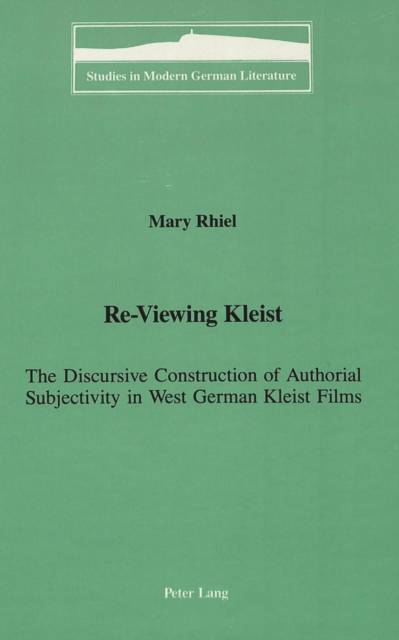
Re-Viewing Kleist
The Discursive Construction of Authorial Subjectivity in West German Kleist Films
Mary Rhiel
€ 46,45
+ 92 punten
Eenvoudig bestellen
Veilig betalen


Gratis thuislevering vanaf € 30 (via bpost)
Gratis levering in je Standaard Boekhandel
Omschrijving
This study examines through textual and contextual analysis how the texts and the biography of Heinrich von Kleist have been appropriated in three West German films since 1975. The author brings to bear at least three areas of expertise - Kleist studies, film semiotics, feminist theory - in a work that closely analyzes Eric Rohmer's Die Marquise von O..., Helma Sanders-Brahms' Heinrich, and Hans Neuenfels' Heinrich Penthesilea von Kleist. Rather than discussing the loyalty of a particular film to the original texts of Kleist, Rhiel looks at each film's discursive construction of authorship and analyzes its participation in the formation of the film's textual and narrative strategies.
Specificaties
Betrokkenen
- Auteur(s):
- Uitgeverij:
Inhoud
- Aantal bladzijden:
- 163
- Taal:
- Engels
- Reeks:
- Reeksnummer:
- nr. 44
Eigenschappen
- Productcode (EAN):
- 9780820415260
- Verschijningsdatum:
- 01/10/1991
- Uitvoering:
- Hardcover
- Formaat:
- Genaaid
- Afmetingen:
- 237 mm x 161 mm
- Gewicht:
- 399 g


Alleen bij Standaard Boekhandel
+ 92 punten op je klantenkaart van Standaard Boekhandel
CADEAU

AANGERADEN


Beoordelingen
We publiceren alleen reviews die voldoen aan de voorwaarden voor reviews. Bekijk onze voorwaarden voor reviews.