


- Afhalen na 1 uur in een winkel met voorraad
- Gratis thuislevering in België vanaf € 30
- Ruim aanbod met 7 miljoen producten
- Afhalen na 1 uur in een winkel met voorraad
- Gratis thuislevering in België vanaf € 30
- Ruim aanbod met 7 miljoen producten





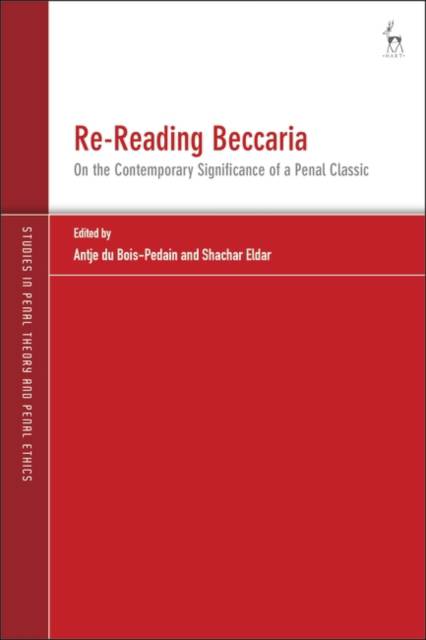
Re-Reading Beccaria
On the Contemporary Significance of a Penal Classic
€ 101,95
+ 203 punten
Omschrijving
Cesare Beccaria's slim 1764 volume On Crimes and Punishments influenced policy developments worldwide and over decades, if not centuries, after its publication. For those who turn to Beccaria's work today, the encounter is shaped by that knowledge.
Appreciative of On Crimes and Punishments' dual nature as historical document and repository of ideas, the contributions in this collection address different aspects of the criminal justice theory Beccaria offered his readers and face up to methodological questions raised by meeting a historical text of this kind - unsystematic and by modern standards often under-argued - with modern scholarly conventions in mind. Contributions in the first part of the book engage with Beccaria's political theory of criminal justice through the lenses of political and penal philosophy, considering how Beccaria's blending of social-contractarian foundations and proto-utilitarian policy analysis interlinks with the concrete set of criminal justice practices Beccaria presents as justified. This leads on to the second part where contributors approach Beccaria's ideas with present-day reforms and developments in mind. Many of his policy proposals and arguments remain significant from our contemporary perspective, their limitations and omissions proving as instructive for the contemporary scholar as their more prescient elements. The third part offers those looking at Beccaria's work today a glimpse into the practical difficulties facing the firebrand author turned public servant during his long career in the Habsburg-Lombardian administration. It puts his work into the broader context of pathways to criminal justice reform in northern Italy, Habsburgian Lombardy, and the Austro-Hungarian Empire in Beccaria's day.Specificaties
Betrokkenen
- Uitgeverij:
Inhoud
- Aantal bladzijden:
- 352
- Taal:
- Engels
- Reeks:
Eigenschappen
- Productcode (EAN):
- 9781509959174
- Verschijningsdatum:
- 4/04/2024
- Uitvoering:
- Paperback
- Formaat:
- Trade paperback (VS)
- Afmetingen:
- 156 mm x 234 mm
- Gewicht:
- 485 g

Alleen bij Standaard Boekhandel
+ 203 punten op je klantenkaart van Standaard Boekhandel
Wedstrijd


Beoordelingen
We publiceren alleen reviews die voldoen aan de voorwaarden voor reviews. Bekijk onze voorwaarden voor reviews.