


- Afhalen na 1 uur in een winkel met voorraad
- Gratis thuislevering in België vanaf € 30
- Ruim aanbod met 7 miljoen producten
- Afhalen na 1 uur in een winkel met voorraad
- Gratis thuislevering in België vanaf € 30
- Ruim aanbod met 7 miljoen producten





€ 58,30
+ 116 punten
Omschrijving
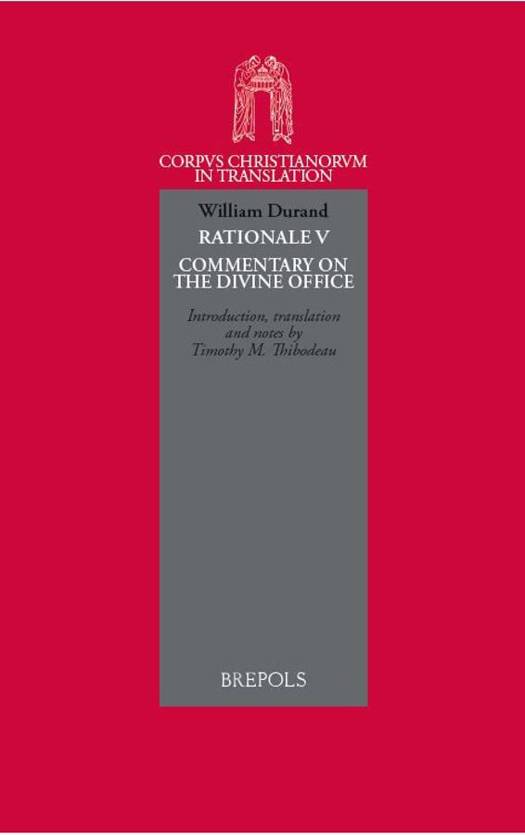
William Durand (c. 1230-Nov. 1, 1296), Bishop of Mende, France, was unquestionably the most renowned liturgical scholar of the later Middle Ages. His encyclopedic allegorical exposition of the rites and worship services of the Latin Church, the Rationale divinorum officiorum, or "Rationale for the divine offices," is the best known medieval work in its genre. Divided into eight books of varying length, the Rationale is exhaustive in its treatment of a wide variety of subjects: the church building and liturgical art; the ministers of the church and their functions; liturgical vestments; the Mass and the Divine Office; the Church's calendar and its feast days. Modern scholarship has clearly shown that Durand's Rationale superseded all previous liturgical commentaries within only a few years of its publication (c. 1292-1296). By the end of the fifteenth century, it had become one of the most widely disseminated treatises of its kind in western Europe. Book 5, Durand's detailed commentary on the Divine Office, has never been translated into English. The present volume makes this important text available for modern students of liturgy, musicology, theology, and art history for whom the original Latin text is not accessible. The present translation also provides extensive annotation and explanation of Durand's sometimes cryptic etymologies, while bringing to light important source material embedded within his commentary. The source text of this volume appeared in Corpus Christianorum Continuatio Mediaeualis as Guillelmus Durantus - Rationale divinorum officiorum V-VI (CCCM 140A). References to the corresponding pages of the Corpus Christianorum edition are provided in the margins of this translation.
Specificaties
Betrokkenen
- Auteur(s):
- Uitgeverij:
Inhoud
- Aantal bladzijden:
- 228
- Taal:
- Engels
- Reeks:
- Reeksnummer:
- nr. 23
Eigenschappen
- Productcode (EAN):
- 9782503555508
- Verschijningsdatum:
- 31/12/2015
- Uitvoering:
- Paperback
- Formaat:
- Trade paperback (VS)
- Afmetingen:
- 155 mm x 231 mm
- Gewicht:
- 385 g


Alleen bij Standaard Boekhandel
+ 116 punten op je klantenkaart van Standaard Boekhandel
Cadeau

AANGERADEN


Beoordelingen
We publiceren alleen reviews die voldoen aan de voorwaarden voor reviews. Bekijk onze voorwaarden voor reviews.