


- Afhalen na 1 uur in een winkel met voorraad
- Gratis thuislevering in België vanaf € 30
- Ruim aanbod met 7 miljoen producten
- Afhalen na 1 uur in een winkel met voorraad
- Gratis thuislevering in België vanaf € 30
- Ruim aanbod met 7 miljoen producten





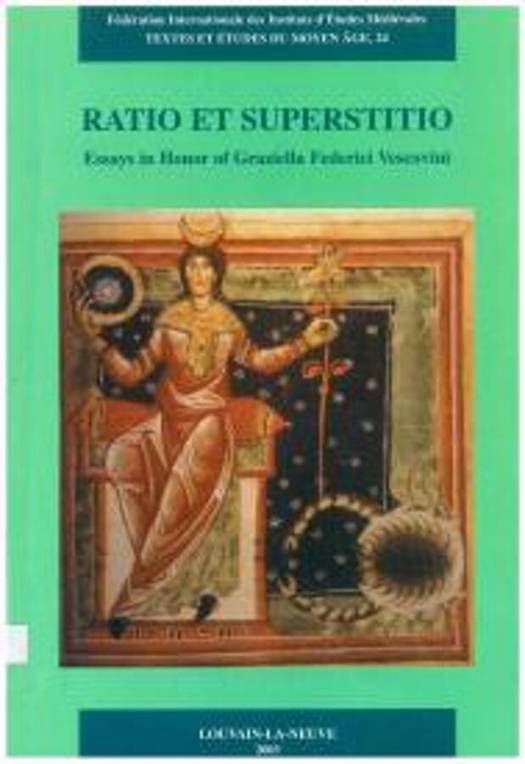
Ratio Et Superstitio
Giancarlo Marchetti
€ 58,30
+ 116 punten
Omschrijving
Twenty-four critical essays, including a substantial introduction, written by the most distinguished international scholars, make up this volume, that reflect the wide-ranging interests of Graziella Federici Vescovini. The essays offer by far the most thorough and thoughtful discussion of relationship between ratio and superstitio, beginning with medieval reflections and ending with "modern" speculation. The unifying themes of these contributions is the spectrum between different forms of reason and superstition. The essays show the tortuous and complex path of philosophical thinking as aiming at truth and discoveries yet previously unknown. This path has not privileged itineraries, but it proceeds by integrations that modify the perspectives continuously, now demonstrating illusory what previously seemed certain, now recuperating in different contexts what was formerly rejected. So what we, the children of modern scientism, might call the foolishness of an epoch (as, for example, medieval judiciary astrology), could well be the scientific wisdom of that epoch. The volume is a broad and suggestive analysis that altogether opens a wide tear in the volume's themes, demonstrating how some authors and some texts have to the modern reader a sense that was not recognized in their time. Anyone with a serious interest in Medieval, Renaissance and "Modern"philosophy will enjoy this invaluable collection. Original essays by: F. Barocelli, J. Biard, F. Bottin, C. Burnett, G. Cacciatore, F. Cambi, G. DOnofrio, J. Hackett, M. McVaugh, G. Marchetti, G. Mari, P. Morpurgo, J. North, A. Pieretti, D. Pingree, O. Pluta, R. Rashed, V. Sorge, F. Tessitore, C. Trottmann, C. Vinti, O. Weijers, P. Zambelli, M. Zanatta.
Specificaties
Betrokkenen
- Auteur(s):
- Uitgeverij:
Inhoud
- Aantal bladzijden:
- 710
- Taal:
- Engels
- Reeks:
- Reeksnummer:
- nr. 24
Eigenschappen
- Productcode (EAN):
- 9782503515236
- Verschijningsdatum:
- 18/11/2003
- Uitvoering:
- Paperback
- Formaat:
- Trade paperback (VS)
- Gewicht:
- 1133 g


Alleen bij Standaard Boekhandel
+ 116 punten op je klantenkaart van Standaard Boekhandel
Cadeau

AANGERADEN


Beoordelingen
We publiceren alleen reviews die voldoen aan de voorwaarden voor reviews. Bekijk onze voorwaarden voor reviews.