


- Afhalen na 1 uur in een winkel met voorraad
- Gratis thuislevering in België vanaf € 30
- Ruim aanbod met 7 miljoen producten
- Afhalen na 1 uur in een winkel met voorraad
- Gratis thuislevering in België vanaf € 30
- Ruim aanbod met 7 miljoen producten





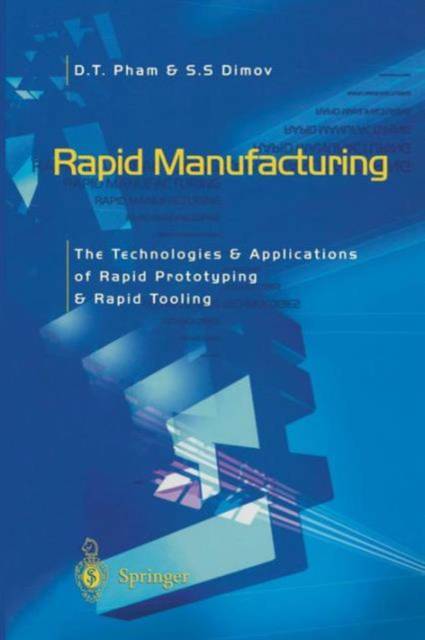
Rapid Manufacturing
The Technologies and Applications of Rapid Prototyping and Rapid Tooling
Duc T Pham, S S Dimov
Paperback | Engels
€ 257,95
+ 515 punten
Omschrijving
Rapid Manufacturing is a term that embraces rapid prototyping and rapid tooling.
Rapid prototyping is an exciting new technology for quickly creating physical models and functional prototypes directly from CAD models. Rapid tooling generally concerns the production of tooling using parts manufactured by rapid prototyping. Rapid prototyping and rapid tooling are means for compressing the time-to-market of products and, as such are competitiveness enhancing technologies.
The book describes the characteristics and capabilities of the main known rapid prototyping processes.
It covers in detail commercially available processes, such as:
- Stereolithography (SLA);
- Selective Laser Sintering (SLS);
- Fused Deposition Modelling (FDM);
- Solid Ground Curing (SGC);
- Laminated Object Manufacturing (LOM)
and provides information on several other processes still under development.
The book discusses various direct and indirect methods of producing soft tooling, firm tooling (or bridge tooling) and hard tooling based on rapid prototyping. The discussion is wide- ranging and not found in other books published to-date. Also special to the book is material on process optimisation. This was derived from work at the authors'Centre and is not available in other texts. The book places a strong emphasis on practical applications, devoting special chapters to both the applications of rapid prototyping and rapid tooling. The book contains an abundance of photographs and diagrams, some in colour, to illustrate clearly the principles of the machines and processes involved. The book does not require any special background. It should be of interest to manufacturing, industrial, production, mechanical and materials engineers wishing to up date themselves on some of the most important developments in modern manufacture. (The authors are from the Manufacturing Engineering Centre, which conducts leading-edge research into advanced manufacturing as well as providinga commercial rapid prototyping and tooling service to several hundred industrial customers).
Rapid prototyping is an exciting new technology for quickly creating physical models and functional prototypes directly from CAD models. Rapid tooling generally concerns the production of tooling using parts manufactured by rapid prototyping. Rapid prototyping and rapid tooling are means for compressing the time-to-market of products and, as such are competitiveness enhancing technologies.
The book describes the characteristics and capabilities of the main known rapid prototyping processes.
It covers in detail commercially available processes, such as:
- Stereolithography (SLA);
- Selective Laser Sintering (SLS);
- Fused Deposition Modelling (FDM);
- Solid Ground Curing (SGC);
- Laminated Object Manufacturing (LOM)
and provides information on several other processes still under development.
The book discusses various direct and indirect methods of producing soft tooling, firm tooling (or bridge tooling) and hard tooling based on rapid prototyping. The discussion is wide- ranging and not found in other books published to-date. Also special to the book is material on process optimisation. This was derived from work at the authors'Centre and is not available in other texts. The book places a strong emphasis on practical applications, devoting special chapters to both the applications of rapid prototyping and rapid tooling. The book contains an abundance of photographs and diagrams, some in colour, to illustrate clearly the principles of the machines and processes involved. The book does not require any special background. It should be of interest to manufacturing, industrial, production, mechanical and materials engineers wishing to up date themselves on some of the most important developments in modern manufacture. (The authors are from the Manufacturing Engineering Centre, which conducts leading-edge research into advanced manufacturing as well as providinga commercial rapid prototyping and tooling service to several hundred industrial customers).
Specificaties
Betrokkenen
- Auteur(s):
- Uitgeverij:
Inhoud
- Aantal bladzijden:
- 214
- Taal:
- Engels
Eigenschappen
- Productcode (EAN):
- 9781447111825
- Verschijningsdatum:
- 9/11/2011
- Uitvoering:
- Paperback
- Formaat:
- Trade paperback (VS)
- Afmetingen:
- 156 mm x 234 mm
- Gewicht:
- 353 g


Alleen bij Standaard Boekhandel
+ 515 punten op je klantenkaart van Standaard Boekhandel
Cadeau

AANGERADEN


Beoordelingen
We publiceren alleen reviews die voldoen aan de voorwaarden voor reviews. Bekijk onze voorwaarden voor reviews.