


- Afhalen na 1 uur in een winkel met voorraad
- Gratis thuislevering in België vanaf € 30
- Ruim aanbod met 7 miljoen producten
- Afhalen na 1 uur in een winkel met voorraad
- Gratis thuislevering in België vanaf € 30
- Ruim aanbod met 7 miljoen producten





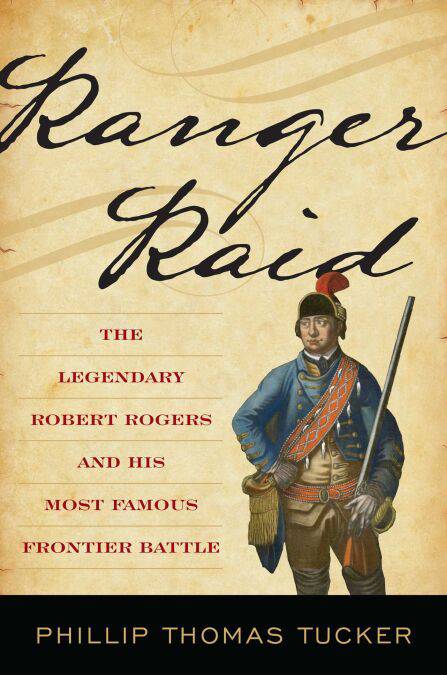
Ranger Raid E-BOOK
The Legendary Robert Rogers and His Most Famous Frontier Battle
Phillip Thomas Tucker
E-book | Engels
€ 25,71
+ 25 punten
Uitvoering
Omschrijving
A figure of legendary, almost mythic proportions, Robert Rogers is widely considered the father of U.S. Army Rangers. He gained his fame during the French and Indian War, fighting in the American and Canadian wilderness for the British colonies and the English Empire against the French and Indians, but a decade later, during the Revolution, he was almost a man without a country. During the American Revolution, George Washington didn’t trust him—indeed, he had Rogers arrested in 1776—nor did the British, who, desperate, gave him a command anyway, and Rogers was pivotal in arresting and executing American spy Nathan Hale. However, Rogers' saga begins in the French and Indian War in what was a true American Odyssey.
Ranger Raid digs deep into Rogers’ most controversial battle: the raid on St. Francis in Canada during the French and Indian War. On October 4, 1759, Rogers and 140 Rangers raided the Native American town of St. Francis, Canada, as part of British general Jeffery Amherst’s plan to gain intelligence in the St. Lawrence region. At the time, and for many decades thereafter, this was seen as a great victory—but now it seems like more of a massacre.
Phillip Thomas Tucker refreshes this story, combining the biography of Robert Rogers, the history of his Rangers, and the history of the native peoples in this region, to tell a new story of the St. Francis raid and its influence in the French and Indian War, the Revolutionary War, and ever after.
Ranger Raid digs deep into Rogers’ most controversial battle: the raid on St. Francis in Canada during the French and Indian War. On October 4, 1759, Rogers and 140 Rangers raided the Native American town of St. Francis, Canada, as part of British general Jeffery Amherst’s plan to gain intelligence in the St. Lawrence region. At the time, and for many decades thereafter, this was seen as a great victory—but now it seems like more of a massacre.
Phillip Thomas Tucker refreshes this story, combining the biography of Robert Rogers, the history of his Rangers, and the history of the native peoples in this region, to tell a new story of the St. Francis raid and its influence in the French and Indian War, the Revolutionary War, and ever after.
Specificaties
Betrokkenen
- Auteur(s):
- Uitgeverij:
Inhoud
- Aantal bladzijden:
- 552
- Taal:
- Engels
Eigenschappen
- Productcode (EAN):
- 9780811769716
- Verschijningsdatum:
- 31/05/2021
- Uitvoering:
- E-book
- Beveiligd met:
- Adobe DRM
- Formaat:
- ePub


Alleen bij Standaard Boekhandel
+ 25 punten op je klantenkaart van Standaard Boekhandel
Cadeau

AANGERADEN


Beoordelingen
We publiceren alleen reviews die voldoen aan de voorwaarden voor reviews. Bekijk onze voorwaarden voor reviews.