


- Afhalen na 1 uur in een winkel met voorraad
- Gratis thuislevering in België vanaf € 30
- Ruim aanbod met 7 miljoen producten
- Afhalen na 1 uur in een winkel met voorraad
- Gratis thuislevering in België vanaf € 30
- Ruim aanbod met 7 miljoen producten





Omschrijving
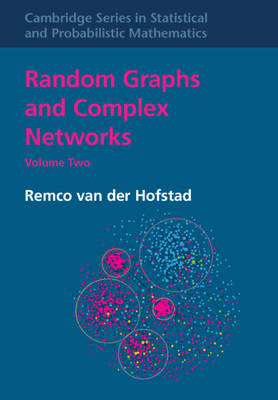
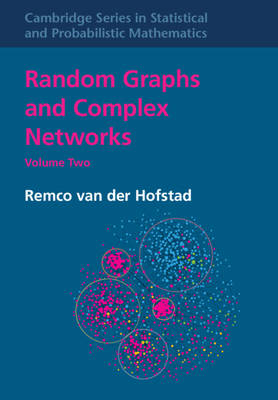
Complex networks are key to describing the connected nature of the society that we live in. This book, the second of two volumes, describes the local structure of random graph models for real-world networks and determines when these models have a giant component and when they are small-, and ultra-small, worlds. This is the first book to cover the theory and implications of local convergence, a crucial technique in the analysis of sparse random graphs. Suitable as a resource for researchers and PhD-level courses, it uses examples of real-world networks, such as the Internet and citation networks, as motivation for the models that are discussed, and includes exercises at the end of each chapter to develop intuition. The book closes with an extensive discussion of related models and problems that demonstratemodern approaches to network theory, such as community structure and directed models.
Specificaties
Betrokkenen
- Auteur(s):
- Uitgeverij:
Inhoud
- Aantal bladzijden:
- 506
- Taal:
- Engels
- Reeks:
Eigenschappen
- Productcode (EAN):
- 9781107174009
- Verschijningsdatum:
- 08/02/2024
- Uitvoering:
- Hardcover
- Formaat:
- Genaaid
- Afmetingen:
- 178 mm x 254 mm
- Gewicht:
- 1088 g


Alleen bij Standaard Boekhandel
+ 259 punten op je klantenkaart van Standaard Boekhandel
AANGERADEN


Beoordelingen
We publiceren alleen reviews die voldoen aan de voorwaarden voor reviews. Bekijk onze voorwaarden voor reviews.