


- Afhalen na 1 uur in een winkel met voorraad
- Gratis thuislevering in België vanaf € 30
- Ruim aanbod met 7 miljoen producten
- Afhalen na 1 uur in een winkel met voorraad
- Gratis thuislevering in België vanaf € 30
- Ruim aanbod met 7 miljoen producten





€ 178,45
+ 356 punten
Uitvoering
Eenvoudig bestellen
Veilig betalen


Gratis thuislevering vanaf € 30 (via bpost)
Gratis levering in je Standaard Boekhandel
Omschrijving
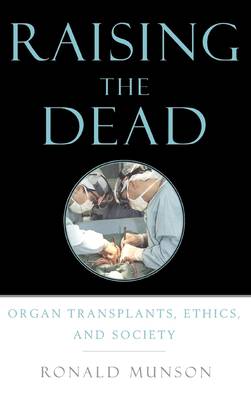
Perhaps no medical breakthrough in the twentieth century is more spectacular, more hope-giving, or more fraught with ethical questions than organ transplantation. Each year some 25,000 Americans are pulled back from the brink of death by receiving vital new organs. Another 5,000 die while waiting for them. And what distinguishes these two groups has become the source of one of our thorniest ethical questions.
In Raising the Dead, Ronald Munson offers a vivid, often wrenchingly dramatic account of how transplants are performed, how we decide who receives them, and how we engage the entire range of tough issues that arise because of them. Each chapter begins with a detailed account of a specific case--Mickey Mantle's controversial liver transplant, for example--followed by careful analysis of its surrounding ethical questions (the charges that Mantle received special treatment because he was a celebrity, the larger problems involving how organs are allocated, and whether alcoholics should have an equal claim on donor livers). In approaching transplant ethics through specific cases, Munson reminds us of the complex personal and emotional dimension that underlies such issues. The book also ranges beyond our present capabilities to explore the future possibilities in xenotransplantation (transplanting animal organs into humans) and stem cell technology that would allow doctors to grow new organs from the patient's own cells.
Based on extensive scientific research, but written with a novelist's eye for the human condition, Raising the Dead shows readers the reality of organ transplantation now, the possibility of what it may become, and how we might respond to the ethical challenges it forces us to confront.
In Raising the Dead, Ronald Munson offers a vivid, often wrenchingly dramatic account of how transplants are performed, how we decide who receives them, and how we engage the entire range of tough issues that arise because of them. Each chapter begins with a detailed account of a specific case--Mickey Mantle's controversial liver transplant, for example--followed by careful analysis of its surrounding ethical questions (the charges that Mantle received special treatment because he was a celebrity, the larger problems involving how organs are allocated, and whether alcoholics should have an equal claim on donor livers). In approaching transplant ethics through specific cases, Munson reminds us of the complex personal and emotional dimension that underlies such issues. The book also ranges beyond our present capabilities to explore the future possibilities in xenotransplantation (transplanting animal organs into humans) and stem cell technology that would allow doctors to grow new organs from the patient's own cells.
Based on extensive scientific research, but written with a novelist's eye for the human condition, Raising the Dead shows readers the reality of organ transplantation now, the possibility of what it may become, and how we might respond to the ethical challenges it forces us to confront.
Specificaties
Betrokkenen
- Auteur(s):
- Uitgeverij:
Inhoud
- Aantal bladzijden:
- 304
- Taal:
- Engels
Eigenschappen
- Productcode (EAN):
- 9780195132991
- Verschijningsdatum:
- 17/01/2002
- Uitvoering:
- Hardcover
- Formaat:
- Genaaid
- Afmetingen:
- 162 mm x 236 mm
- Gewicht:
- 612 g


Alleen bij Standaard Boekhandel
+ 356 punten op je klantenkaart van Standaard Boekhandel
CADEAU

AANGERADEN


Beoordelingen
We publiceren alleen reviews die voldoen aan de voorwaarden voor reviews. Bekijk onze voorwaarden voor reviews.