


- Afhalen na 1 uur in een winkel met voorraad
- Gratis thuislevering in België vanaf € 30
- Ruim aanbod met 7 miljoen producten
- Afhalen na 1 uur in een winkel met voorraad
- Gratis thuislevering in België vanaf € 30
- Ruim aanbod met 7 miljoen producten




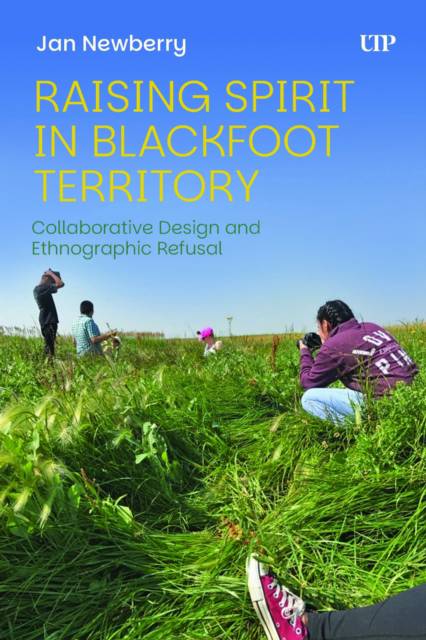
Raising Spirit in Blackfoot Territory
Collaborative Design and Ethnographic Refusal
Janice Newberry, Jan Newberry
Paperback | Engels
€ 44,45
Omschrijving
Raising Spirit in Blackfoot Territory examines the ethnographic dilemmas that arose across the run of the Raising Spirit project. This book asks what ethnography can be in the era of reconciliation based on this multi-year, multimodal, collaborative project to articulate child-rearing values in Blackfoot Territory.
Collaborative work between a university and Indigenous community organization to build a digital storytelling library brought together researchers young and old, Indigenous and settler, university and community based. This book centrally concerns ethnography as a form of expertise and its need for a decolonizing fix. Young researchers were positioned as para-ethnographers and tasked with identifying cultural values for the digital library. Their design-influenced innovations to code collaboratively were an inspired answer to the political and ethical questions of knowledge production in a time of Indigenous resurgence and racial reckoning. Yet, when asked to serve as culture experts, young Indigenous researchers refused. The generative power of their refusals revealed the possibility for new imaginaries that exceed ethnographic recognition.
Anthropologist Jan Newberry probes deeply into important questions on how to produce knowledge in a system that was designed to erase the voices it now is trying to bring to the fore. This work contributes to the reimagining of ethnographic methods in anthropology and productively expands attention to issues of expertise and ethnographic collaboration with Indigenous peoples.
Collaborative work between a university and Indigenous community organization to build a digital storytelling library brought together researchers young and old, Indigenous and settler, university and community based. This book centrally concerns ethnography as a form of expertise and its need for a decolonizing fix. Young researchers were positioned as para-ethnographers and tasked with identifying cultural values for the digital library. Their design-influenced innovations to code collaboratively were an inspired answer to the political and ethical questions of knowledge production in a time of Indigenous resurgence and racial reckoning. Yet, when asked to serve as culture experts, young Indigenous researchers refused. The generative power of their refusals revealed the possibility for new imaginaries that exceed ethnographic recognition.
Anthropologist Jan Newberry probes deeply into important questions on how to produce knowledge in a system that was designed to erase the voices it now is trying to bring to the fore. This work contributes to the reimagining of ethnographic methods in anthropology and productively expands attention to issues of expertise and ethnographic collaboration with Indigenous peoples.
Specificaties
Betrokkenen
- Auteur(s):
- Uitgeverij:
Inhoud
- Aantal bladzijden:
- 248
- Taal:
- Engels
Eigenschappen
- Productcode (EAN):
- 9781487560027
- Verschijningsdatum:
- 28/10/2025
- Uitvoering:
- Paperback
- Formaat:
- Trade paperback (VS)
- Afmetingen:
- 152 mm x 226 mm
- Gewicht:
- 317 g


Alleen bij Standaard Boekhandel
Cadeau

AANGERADEN


Beoordelingen
We publiceren alleen reviews die voldoen aan de voorwaarden voor reviews. Bekijk onze voorwaarden voor reviews.