



Bedankt voor het vertrouwen het afgelopen jaar! Om jou te bedanken bieden we GRATIS verzending (in België) aan op alles gedurende de hele maand januari.
- Afhalen na 1 uur in een winkel met voorraad
- In januari gratis thuislevering in België
- Ruim aanbod met 7 miljoen producten
Bedankt voor het vertrouwen het afgelopen jaar! Om jou te bedanken bieden we GRATIS verzending (in België) aan op alles gedurende de hele maand januari.
- Afhalen na 1 uur in een winkel met voorraad
- In januari gratis thuislevering in België
- Ruim aanbod met 7 miljoen producten





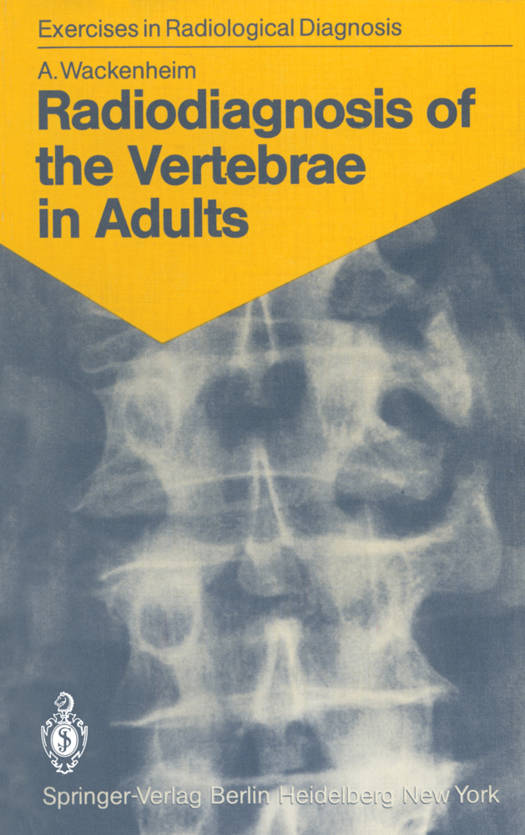
Radiodiagnosis of the Vertebrae in Adults
125 Exercises for Students and Practitioners
Auguste Wackenheim
€ 153,95
+ 307 punten
Omschrijving
This book is intended for beginners and for those who want to refresh their knowledge of the elementary radioanatomy of the vertebrae, particularly their pathological radioanatomy. I do not pretend, as does Roger Martin du Gard's hero, that one always must begin with a radiographic examination, but I do believe that a student, especially one interested in radiology, must be able to apprehend an image isolated from its clinical context. To optimize memorization of the image I have selected unmistakable cases with marked, well-evolved lesions. This will enable the studentlater to recognize less distinct images of the same kind. The first section of the book is exclusively iconographic. After studying an image, the reader will find in the second section, under the appropriate reference number, a commen- tary illustrated with a realistic drawing by my friend Dr. Csaba Hethalmi. Attention to the following points will assist a fruitful reading: 1. Cases 1-5 involve normal subjects; all other cases are pathological. 2. The reader must imagine that he is conducting a routine examination and draw on his resources to make a practical analysis of an image. As a matter of fact, all the films (except that in case 46, which is the radiograph of a specimen) were -indeed taken under routine conditions using standard pro- jections. 3. The cases are in no systematic or nosological order. Each case is illustrated with one, two, or (rarely) three images.
Specificaties
Betrokkenen
- Auteur(s):
- Uitgeverij:
Inhoud
- Aantal bladzijden:
- 176
- Taal:
- Engels
- Reeks:
Eigenschappen
- Productcode (EAN):
- 9783540116813
- Verschijningsdatum:
- 1/12/1982
- Uitvoering:
- Paperback
- Formaat:
- Trade paperback (VS)
- Afmetingen:
- 133 mm x 203 mm
- Gewicht:
- 199 g


Alleen bij Standaard Boekhandel
+ 307 punten op je klantenkaart van Standaard Boekhandel
SOLDEN


Beoordelingen
We publiceren alleen reviews die voldoen aan de voorwaarden voor reviews. Bekijk onze voorwaarden voor reviews.