


- Afhalen na 1 uur in een winkel met voorraad
- Gratis thuislevering in België vanaf € 30
- Ruim aanbod met 7 miljoen producten
- Afhalen na 1 uur in een winkel met voorraad
- Gratis thuislevering in België vanaf € 30
- Ruim aanbod met 7 miljoen producten





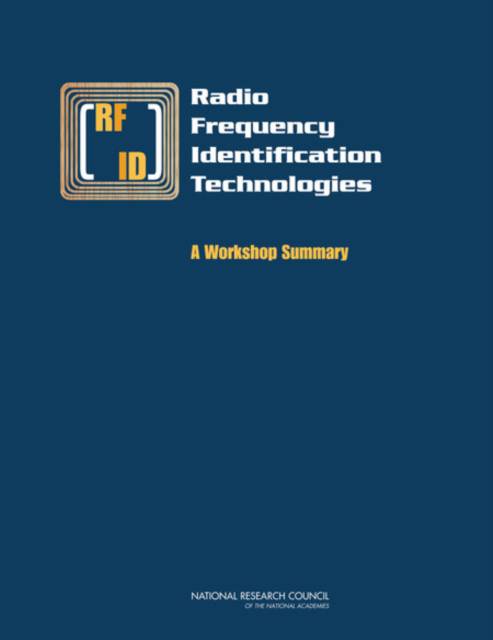
Radio Frequency Identification Technologies
A Workshop Summary
National Research Council, Division on Engineering and Physical Sciences, Computer Science and Telecommunications Board, Committee on Radio Frequency Identification Technologies
Paperback | Engels
€ 60,95
+ 121 punten
Eenvoudig bestellen
Veilig betalen


Gratis thuislevering vanaf € 30 (via bpost)
Gratis levering in je Standaard Boekhandel
Omschrijving
Radio Frequency Identification (RFID) technology is gaining rapid acceptance as a means to track a wide array of manufactured objects. Currently, RFID technologies have shown promise in transportation (e.g., smart fare cards) and commerce (e.g., inventory control) for a variety of uses and are likely to find many new applications in both military and civilian areas if and when current technical issues are resolved. There are a number of policy concerns (e.g., privacy), however, that will become more crucial as the technology spreads. This report presents a summary of a workshop, held by the NRC at the request of the Defense Advanced Research Projects Agency, to explore many of the key technical and policy issues. Several important themes that are likely to govern expansion of RFID technology emerged from the workshop and are discussed.
Specificaties
Betrokkenen
- Auteur(s):
- Uitgeverij:
Inhoud
- Aantal bladzijden:
- 51
- Taal:
- Engels
Eigenschappen
- Productcode (EAN):
- 9780309095433
- Verschijningsdatum:
- 1/12/2004
- Uitvoering:
- Paperback
- Formaat:
- Trade paperback (VS)
- Afmetingen:
- 211 mm x 275 mm
- Gewicht:
- 181 g


Alleen bij Standaard Boekhandel
+ 121 punten op je klantenkaart van Standaard Boekhandel
CADEAU

AANGERADEN


Beoordelingen
We publiceren alleen reviews die voldoen aan de voorwaarden voor reviews. Bekijk onze voorwaarden voor reviews.