


- Afhalen na 1 uur in een winkel met voorraad
- Gratis thuislevering in België vanaf € 30
- Ruim aanbod met 7 miljoen producten
- Afhalen na 1 uur in een winkel met voorraad
- Gratis thuislevering in België vanaf € 30
- Ruim aanbod met 7 miljoen producten





€ 183,45
+ 366 punten
Uitvoering
Omschrijving
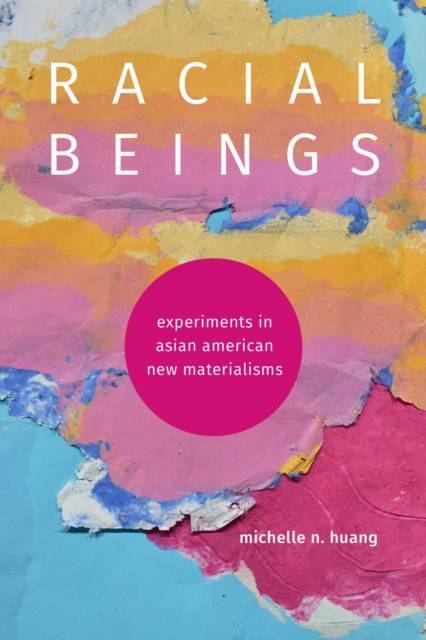
In Racial Beings, Michelle N. Huang brings a feminist new materialist lens to bear on contemporary Asian American literature's innovative play with discourses of science and technology. She argues that emerging from these works is a "molecular aesthetics"--formal experimentation that diminishes the boundaries of the human--which challenge the perception of racial identity as a trait of an individual human. Instead, molecular aesthetics reveals how race permeates the matter of the world. Reading works by authors such as Ruth Ozeki, Larissa Lai, Mei-mei Berssenbrugge, and Julie Otsuka through the language of scientific discourses like quantum physics, genetic engineering, and elemental chemistry, Huang develops a synthetic reading practice which shows both that the nexus of race and science is not reducible to scientific racism and that science can provide an unlikely creative reservoir for Asian American writers and artists which allows us to imagine alternative ways of understanding racial being beyond the limits of the human individual.
Specificaties
Betrokkenen
- Auteur(s):
- Uitgeverij:
Inhoud
- Aantal bladzijden:
- 264
- Taal:
- Engels
- Reeks:
Eigenschappen
- Productcode (EAN):
- 9781478029762
- Verschijningsdatum:
- 24/03/2026
- Uitvoering:
- Hardcover
- Formaat:
- Genaaid
- Afmetingen:
- 152 mm x 229 mm
- Gewicht:
- 526 g


Alleen bij Standaard Boekhandel
+ 366 punten op je klantenkaart van Standaard Boekhandel
Cadeau

AANGERADEN


Beoordelingen
We publiceren alleen reviews die voldoen aan de voorwaarden voor reviews. Bekijk onze voorwaarden voor reviews.