


- Afhalen na 1 uur in een winkel met voorraad
- Gratis thuislevering in België vanaf € 30
- Ruim aanbod met 7 miljoen producten
- Afhalen na 1 uur in een winkel met voorraad
- Gratis thuislevering in België vanaf € 30
- Ruim aanbod met 7 miljoen producten





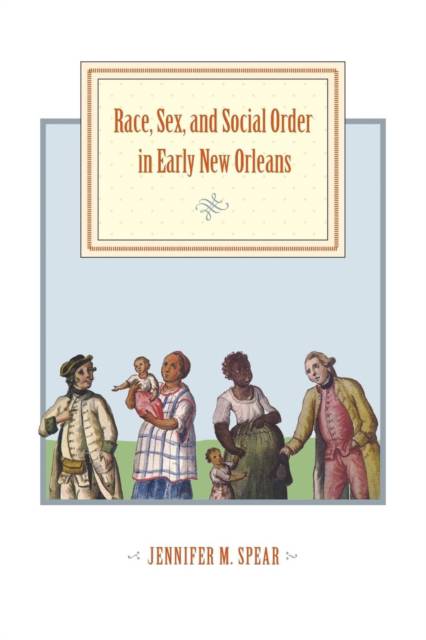
Race, Sex, and Social Order in Early New Orleans
Jennifer M Spear
€ 61,45
Omschrijving
A microcosm of exaggerated societal extremes-poverty and wealth, vice and virtue, elitism and equality-New Orleans is a tangled web of race, cultural mores, and sexual identities. Jennifer M. Spear's examination of the dialectical relationship between politics and social practice unravels the city's construction of race during the eighteenth and early nineteenth centuries. Spear brings together archival evidence from three different languages and the most recent and respected scholarship on racial formation and interracial sex to explain why free people of color became a significant population in the early days of New Orleans and to show how authorities attempted to use concepts of race and social hierarchy to impose order on a decidedly disorderly society. She recounts and analyzes the major conflicts that influenced New Orleanian culture: legal attempts to impose racial barriers and social order, political battles over propriety and freedom, and cultural clashes over place and progress. At each turn, Spear's narrative challenges the prevailing academic assumptions and supports her efforts to move exploration of racial formation away from cultural and political discourses and toward social histories. Strikingly argued, richly researched, and methodologically sound, this wide-ranging look at how choices about sex triumphed over established class systems and artificial racial boundaries supplies a refreshing contribution to the history of early Louisiana.
Specificaties
Betrokkenen
- Auteur(s):
- Uitgeverij:
Inhoud
- Aantal bladzijden:
- 352
- Taal:
- Engels
- Reeks:
Eigenschappen
- Productcode (EAN):
- 9781421415734
- Verschijningsdatum:
- 01/10/2014
- Uitvoering:
- Paperback
- Formaat:
- Trade paperback (VS)
- Afmetingen:
- 152 mm x 229 mm
- Gewicht:
- 512 g



Alleen bij Standaard Boekhandel
Cadeau

AANGERADEN


Beoordelingen
We publiceren alleen reviews die voldoen aan de voorwaarden voor reviews. Bekijk onze voorwaarden voor reviews.