


- Afhalen na 1 uur in een winkel met voorraad
- Gratis thuislevering in België vanaf € 30
- Ruim aanbod met 7 miljoen producten
- Afhalen na 1 uur in een winkel met voorraad
- Gratis thuislevering in België vanaf € 30
- Ruim aanbod met 7 miljoen producten





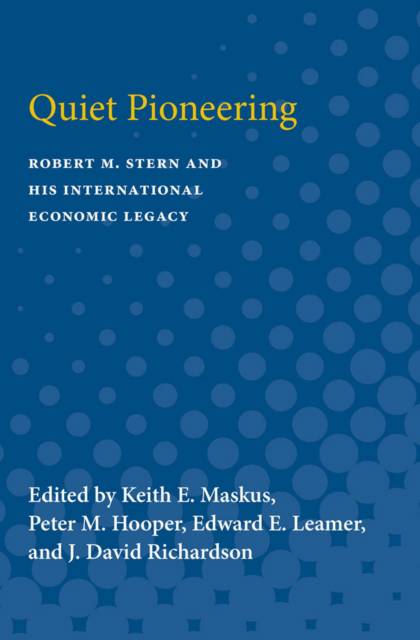
Quiet Pioneering
Robert M. Stern and His International Economic Legacy
€ 77,95
+ 155 punten
Omschrijving
New scholarly research in important aspects of international economics is brought together in this volume. The unifying theme is that each chapter is devoted to a fresh analysis of a problem in international economics that had earlier received cogent and prescient attention by Professor Robert Stern of the University of Michigan, one of the major figures in international economic research in the second half of the twentieth century. Each chapter examines a significant issue in international trade or finance, including determinants of comparative advantage, the effects of trade restrictions and the importance of trade liberalization, aspects of international trade institutions, and monetary policy in integrated markets. Three broad areas of international economic analysis are explored. The first part of the volume is devoted to new and sophisticated empirical analyses of important policy questions, such as technical change in trade models, how nontariff barriers are established, and how patent protection affects trade flows. The second part analyzes key areas involving international trade negotiations, including the usefulness of binding tariff commitments, regionalism versus bilateralism in trade liberalization, and strategic competition among international firms in setting negotiating agendas. The final part considers important questions in labor costs, asset pricing, and monetary union in international markets. Professional international economists will find much worth reading in the volume. It also is relevant to those who study international relations and international organizations; political scientists; and government policy analysts. Keith E. Maskus is Professor of Economics, University of Colorado, Boulder. Peter M. Hooper is Assistant Director, Division of International Finance, Board of Governors of the Federal Reserve System. Edward E. Leamer is Professor of Economics and Management, University of California, Los Angeles. J. David Richardson is Professor of Economics, Syracuse University.
Specificaties
Betrokkenen
- Uitgeverij:
Inhoud
- Aantal bladzijden:
- 392
- Taal:
- Engels
- Reeks:
Eigenschappen
- Productcode (EAN):
- 9780472751624
- Verschijningsdatum:
- 1/01/1998
- Uitvoering:
- Paperback
- Formaat:
- Trade paperback (VS)
- Afmetingen:
- 152 mm x 229 mm
- Gewicht:
- 576 g

Alleen bij Standaard Boekhandel
+ 155 punten op je klantenkaart van Standaard Boekhandel
CADEAU

AANGERADEN


Beoordelingen
We publiceren alleen reviews die voldoen aan de voorwaarden voor reviews. Bekijk onze voorwaarden voor reviews.