


- Afhalen na 1 uur in een winkel met voorraad
- Gratis thuislevering in België vanaf € 30
- Ruim aanbod met 7 miljoen producten
- Afhalen na 1 uur in een winkel met voorraad
- Gratis thuislevering in België vanaf € 30
- Ruim aanbod met 7 miljoen producten





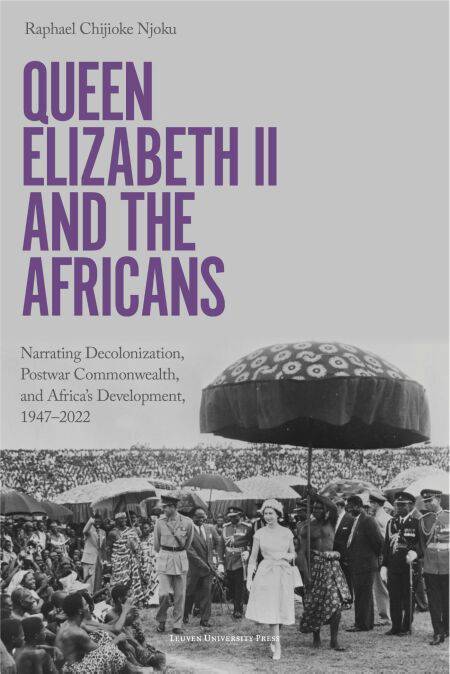
Queen Elizabeth II and the Africans E-BOOK
Narrating Decolonization, Postwar Commonwealth, and Africa's Development, 1947 – 2022
Raphael Chijioke Njoku
E-book | Engels
€ 24,00
+ 24 punten
Uitvoering
Omschrijving
The road to Queen Elizabeth II's implementation of African reforms was rough, especially in the first two decades following her ascension to the throne. In this book, Raphael Chijioke Njoku examines Queen Elizabeth II's role in the African decolonization trajectories and the postcolonial state's quest for genuine political and economic liberation since 1947. By locating Elizabeth at the center of Anglophone Africa's independence agitations, the account harnesses the African interests to tease out the monarch's dilemma of complying with Whitehall's decolonization schemes while building an inclusive and unified Commonwealth in which Africans could play a vital role. Njoku argues that to gratify British lawmakers in her complex and marginal place within the British parliamentary system of conservative versus reformist, Elizabeth's contribution fell short of African nationalists' expectations on account of her silence and inaction during the African decolonization raptures. Yet ultimately, the author concludes, she helped build an inclusive and unified organization in which Africans could assert and appropriate political and economic autarky.
Raphael Chijioke Njoku, PhD, is an African history and global studies professor at Idaho State University.
Njoku provides a vivid and sweeping account of Queen Elizabeth II's involvement in British relations with Africa during the era of decolonization and the Cold War and beyond. – Tim Stapleton, University of Calgary
Like an opera, this book masterfully brings various aspects of British imperialism, colonial discourses, and African assertions of personhood into harmony. It is an essential read for all interested in empire and the politics of decolonization in British colonial Africa. – Chima Korieh, Marquette University
Raphael Chijioke Njoku, PhD, is an African history and global studies professor at Idaho State University.
Njoku provides a vivid and sweeping account of Queen Elizabeth II's involvement in British relations with Africa during the era of decolonization and the Cold War and beyond. – Tim Stapleton, University of Calgary
Like an opera, this book masterfully brings various aspects of British imperialism, colonial discourses, and African assertions of personhood into harmony. It is an essential read for all interested in empire and the politics of decolonization in British colonial Africa. – Chima Korieh, Marquette University
Specificaties
Betrokkenen
- Auteur(s):
- Uitgeverij:
Inhoud
- Aantal bladzijden:
- 270
- Taal:
- Engels
Eigenschappen
- Productcode (EAN):
- 9789461665805
- Verschijningsdatum:
- 4/09/2024
- Uitvoering:
- E-book
- Beveiligd met:
- Digital watermarking
- Formaat:


Alleen bij Standaard Boekhandel
+ 24 punten op je klantenkaart van Standaard Boekhandel
Cadeau

AANGERADEN


Beoordelingen
We publiceren alleen reviews die voldoen aan de voorwaarden voor reviews. Bekijk onze voorwaarden voor reviews.