


- Afhalen na 1 uur in een winkel met voorraad
- Gratis thuislevering in België vanaf € 30
- Ruim aanbod met 7 miljoen producten
- Afhalen na 1 uur in een winkel met voorraad
- Gratis thuislevering in België vanaf € 30
- Ruim aanbod met 7 miljoen producten





€ 81,45
+ 162 punten
Omschrijving
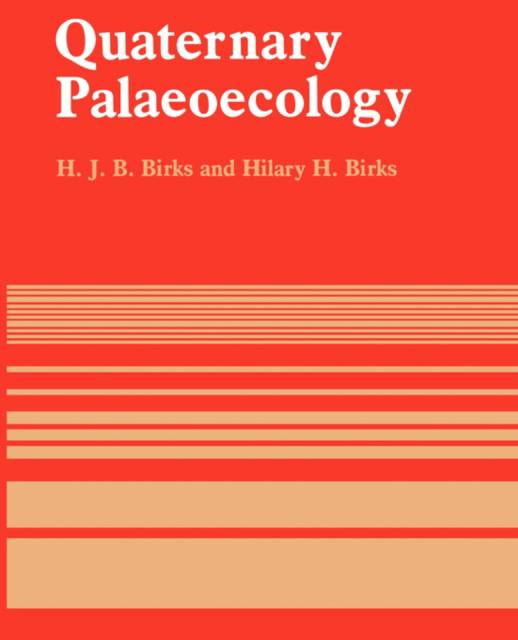
Quaternary Palaeoecology, first published in 1980, discusses the methods and approaches by which Quaternary environments can be reconstructed from the fossil and sedimentary record. This knowledge is of great value as the Quaternary was a time of rapid ecological change, culminating in the present pattern and diversity of ecosystems. It is possible not only to relate these changes to fluctuating climates but also to infer what Man's early influence may have been. The authors describe how past flora and fauna can be reconstructed and how the numbers of fossils can be used to reconstruct past plant and animal populations and communities, and past environments. John Birks has researched in a variety of fields within Quaternary palaeoecology, including pollen analysis and vegetation history, environmental change, past climate reconstruction, and palaeolimnology. Since the 1980s he has introduced and developed numerical methods and quantitative approaches into palaeoecology and palaeolimnology. Besides research in Norway and the UK, he has also worked on palaeoecological problems in Svalbard, Sweden, Finland, Switzerland, Minnesota, and the Yukon. He serves on the editorial boards of several journals and has published widely on many aspects of Quaternary palaeoecology. He is currently Professor of Quantitative Palaeoecology at the University of Bergen, Norway, and University College London, UK. Hilary Birks researches on palaeoecology and past climates primarily through the use of plant macrofossil analysis. She took up the study of plant macrofossils in Minnesota, USA in 1970, where she investigated the modern representation of plants in lake sediments by their fruits and seeds, and also worked on the palaeolimnological record of recent eutrophication and late-glacial palaeoecology. Since then she has extended her macrofossil studies to the late-glacial of Scotland and western Norway, the full-glacial of Beringia (Alaska) and recent changes in North African lakes brought about by human activities. She is Professor of Palaeoecology at the University of Bergen, Norway and teaches palaeoecology at the University of Bergen and University College London, UK.
Specificaties
Betrokkenen
- Auteur(s):
- Uitgeverij:
Inhoud
- Aantal bladzijden:
- 300
- Taal:
- Engels
Eigenschappen
- Productcode (EAN):
- 9781930665569
- Verschijningsdatum:
- 1/11/2004
- Uitvoering:
- Paperback
- Formaat:
- Trade paperback (VS)
- Afmetingen:
- 190 mm x 235 mm
- Gewicht:
- 517 g


Alleen bij Standaard Boekhandel
+ 162 punten op je klantenkaart van Standaard Boekhandel
Cadeau

AANGERADEN


Beoordelingen
We publiceren alleen reviews die voldoen aan de voorwaarden voor reviews. Bekijk onze voorwaarden voor reviews.