


- Afhalen na 1 uur in een winkel met voorraad
- Gratis thuislevering in België vanaf € 30
- Ruim aanbod met 7 miljoen producten
- Afhalen na 1 uur in een winkel met voorraad
- Gratis thuislevering in België vanaf € 30
- Ruim aanbod met 7 miljoen producten





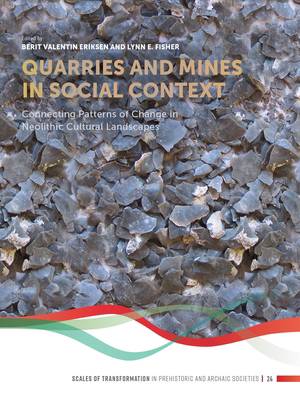
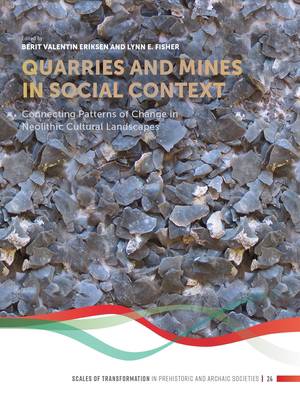
Quarries and Mines in Social Context
Connecting Patterns of Change in Neolithic Cultural Landscapes
Eriksen Berit
€ 70,00
+ 140 punten
Uitvoering
Omschrijving
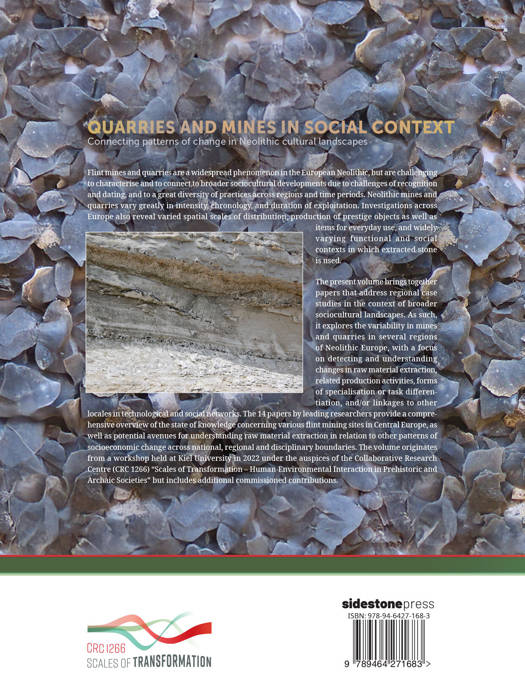
Flint mines and quarries are a widespread phenomenon in the European Neolithic, but are difficult to characterise and to connect to broader sociocultural developments due to challenges of recognition and dating, and to a great diversity of practices across regions and time periods. Neolithic mines and quarries vary greatly in intensity, chronology, and duration of exploitation. Investigations across Europe also reveal varied spatial scales of distribution, production of prestige objects as well as items for everyday use, and widely varying functional and social contexts in which extracted stone is used.
The present volume brings together papers that address regional case studies in the context of broader sociocultural landscapes. As such, it explores the variability in mines and quarries in several regions of Neolithic Europe, with a focus on detecting and understanding changes in raw material extraction, related production activities, forms of specialisation or task differentiation, and/or linkages to other locales in technological and social networks. The 14 papers by leading researchers provide a comprehensive overview of the state of knowledge concerning various flint mining and quarrying sites in Central Europe, as well as potential avenues for understanding raw material extraction in relation to other patterns of socio-economic change across national, regional and disciplinary boundaries. The volume originates from a workshop held at Kiel University in 2022 under the auspices of the Collaborative Research Centre (CRC 1266) "Scales of Transformation - Human-Environmental Interaction in Prehistoric and Archaic Societies".
The present volume brings together papers that address regional case studies in the context of broader sociocultural landscapes. As such, it explores the variability in mines and quarries in several regions of Neolithic Europe, with a focus on detecting and understanding changes in raw material extraction, related production activities, forms of specialisation or task differentiation, and/or linkages to other locales in technological and social networks. The 14 papers by leading researchers provide a comprehensive overview of the state of knowledge concerning various flint mining and quarrying sites in Central Europe, as well as potential avenues for understanding raw material extraction in relation to other patterns of socio-economic change across national, regional and disciplinary boundaries. The volume originates from a workshop held at Kiel University in 2022 under the auspices of the Collaborative Research Centre (CRC 1266) "Scales of Transformation - Human-Environmental Interaction in Prehistoric and Archaic Societies".
Specificaties
Betrokkenen
- Auteur(s):
- Uitgeverij:
Inhoud
- Aantal bladzijden:
- 420
- Taal:
- Engels
- Reeks:
Eigenschappen
- Productcode (EAN):
- 9789464271683
- Verschijningsdatum:
- 5/11/2026
- Uitvoering:
- Paperback
- Formaat:
- Trade paperback (VS)
- Afmetingen:
- 210 mm x 279 mm


Alleen bij Standaard Boekhandel
+ 140 punten op je klantenkaart van Standaard Boekhandel
Cadeau

AANGERADEN


Beoordelingen
We publiceren alleen reviews die voldoen aan de voorwaarden voor reviews. Bekijk onze voorwaarden voor reviews.