


- Afhalen na 1 uur in een winkel met voorraad
- Gratis thuislevering in België vanaf € 30
- Ruim aanbod met 7 miljoen producten
- Afhalen na 1 uur in een winkel met voorraad
- Gratis thuislevering in België vanaf € 30
- Ruim aanbod met 7 miljoen producten





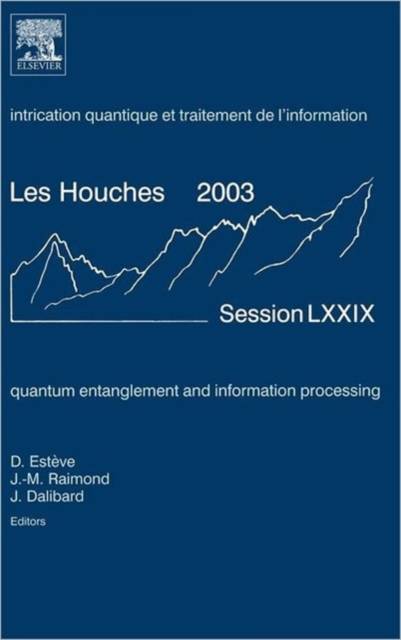
Quantum Entanglement and Information Processing
Lecture Notes of the Les Houches Summer School 2003
€ 133,95
+ 267 punten
Omschrijving
It has been recognised recently that the strange features of the quantum world could be used for new information transmission or processing functions such as quantum cryptography or, more ambitiously, quantum computing. These fascinating perspectives renewed the interest in fundamental quantum properties and lead to important theoretical advances, such as quantum algorithms and quantum error correction codes. On the experimental side, remarkable advances have been achieved in quantum optics, solid state physics or nuclear magnetic resonance. This book presents the lecture notes of the Les Houches Summer School on 'Quantum entanglement and information processing'. Following the long tradition of the les Houches schools, it provides a comprehensive and pedagogical approach of the whole field, written by renowned specialists.One major goal of this book is to establish connections between the communities of quantum optics and of quantum electronic devices working in the area of quantum computing. When two communities share the same goals, the universality of physics unavoidably leads to similar developments. However, the communication barrier is often high, and few physicists are able to overcome it. This school has contributed to bridge the existing gap between communities, for the benefit of the future actors in the field of quantum computing. The book thus combines introductory chapters, providing the reader with a sufficiently wide theoretical framework in quantum information, quantum optics and quantum circuits physics, with more specialized presentations of recent theoretical and experimental advances in the field. This structure makes the book accessible to any graduate student having a good knowledge of basic quantum mechanics, and extremely useful to researchers.
Specificaties
Betrokkenen
- Uitgeverij:
Inhoud
- Aantal bladzijden:
- 638
- Taal:
- Engels
- Reeks:
- Reeksnummer:
- nr. 79
Eigenschappen
- Productcode (EAN):
- 9780444517289
- Verschijningsdatum:
- 1/10/2004
- Uitvoering:
- Hardcover
- Formaat:
- Genaaid
- Afmetingen:
- 159 mm x 234 mm
- Gewicht:
- 1138 g

Alleen bij Standaard Boekhandel
+ 267 punten op je klantenkaart van Standaard Boekhandel
Cadeau

AANGERADEN


Beoordelingen
We publiceren alleen reviews die voldoen aan de voorwaarden voor reviews. Bekijk onze voorwaarden voor reviews.