


- Afhalen na 1 uur in een winkel met voorraad
- Gratis thuislevering in België vanaf € 30
- Ruim aanbod met 7 miljoen producten
- Afhalen na 1 uur in een winkel met voorraad
- Gratis thuislevering in België vanaf € 30
- Ruim aanbod met 7 miljoen producten





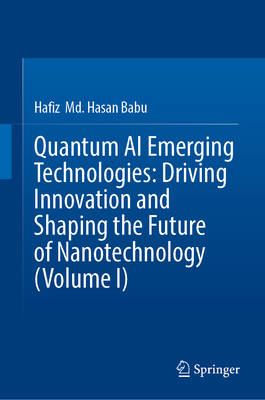
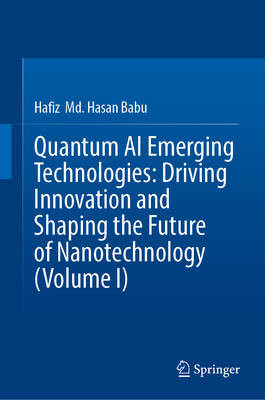
Quantum AI Emerging Technologies: Driving Innovation and Shaping the Future of Nanotechnology (Volume I)
Hafiz MD Hasan Babu
Hardcover | Engels
€ 152,95
+ 305 punten
Omschrijving
Quantum AI Emerging Technologies: Driving Innovation and Shaping the Future of Nanotechnology focuses on the transformative synergy between quantum computing, artificial intelligence, and engineering at the atomic scale. As a thorough introduction to the Quantum-AI-Nano trinity, Volume I focuses on methodically revealing the fundamental elements. It introduces readers to core quantum computing principles such as superposition, entanglement, and decoherence, while also exploring the essential design considerations for quantum photonic systems, CMOS-compatible qubit integration, quantum brain, quantum radar technology, green quantum computing, vulnerabilities and countermeasures in quantum VLSI circuits, neural atom quantum computers, quantum-dot cellular automata (QCA), etc. The Volume I serves multiple purposes. For academic institutions, it can support advanced courses in quantum computing, AI systems architecture, or VLSI design. For industry professionals, it offers a reference for emerging trends and foundational principles. For researchers and developers, it offers a springboard for experimentation in next-generation system design. By offering a robust theoretical foundation and grounding it with practical applications, Volume I prepares the reader to engage meaningfully with the more application-driven content explored in Volume II. That second volume will turn toward robotics, cybersecurity, smart infrastructure, and domain-specific quantum AI applications--topics that depend on the foundational understanding cultivated here. This volume reflects the spirit of collaborative innovation that defines the quantum AI era. We hope it empowers readers to participate in the development of intelligent quantum systems--systems that are not only powerful and efficient but also ethical, sustainable, and resilient.
Specificaties
Betrokkenen
- Auteur(s):
- Uitgeverij:
Inhoud
- Taal:
- Engels
Eigenschappen
- Productcode (EAN):
- 9789819213733
- Verschijningsdatum:
- 9/08/2026
- Uitvoering:
- Hardcover
- Formaat:
- Genaaid
- Afmetingen:
- 155 mm x 235 mm


Alleen bij Standaard Boekhandel
+ 305 punten op je klantenkaart van Standaard Boekhandel
Cadeau

AANGERADEN


Beoordelingen
We publiceren alleen reviews die voldoen aan de voorwaarden voor reviews. Bekijk onze voorwaarden voor reviews.