


- Afhalen na 1 uur in een winkel met voorraad
- Gratis thuislevering in België vanaf € 30
- Ruim aanbod met 7 miljoen producten
- Afhalen na 1 uur in een winkel met voorraad
- Gratis thuislevering in België vanaf € 30
- Ruim aanbod met 7 miljoen producten





Omschrijving
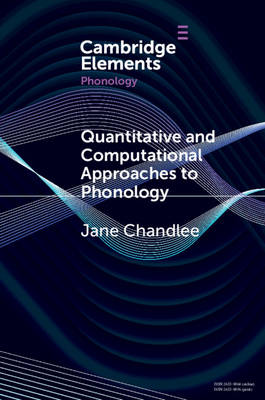
This Element surveys the various lines of work that have applied algorithmic, formal, mathematical, statistical, and/or probabilistic methods to the study of phonology and the computational problems it solves. Topics covered include: how quantitative and/or computational methods have been used in research on both rule- and constraint-based theories of the grammar, including questions about how grammars are learned from data, how to best account for gradience as observed in acceptability judgments and the relative frequencies of different structures in the lexicon, what formal language theory, model theory, and information theory can and have contributed to the study of phonology, and what new directions in connectionist modeling are being explored. The overarching goal is to highlight how the work grounded in these various methods and theoretical orientations is distinct but also interconnected, and how central quantitative and computational approaches have become to the research in and teaching of phonology.
Specificaties
Betrokkenen
- Auteur(s):
- Uitgeverij:
Inhoud
- Aantal bladzijden:
- 86
- Taal:
- Engels
- Reeks:
Eigenschappen
- Productcode (EAN):
- 9781009420396
- Verschijningsdatum:
- 16/01/2025
- Uitvoering:
- Paperback
- Formaat:
- Trade paperback (VS)
- Afmetingen:
- 152 mm x 229 mm
- Gewicht:
- 127 g


Alleen bij Standaard Boekhandel
+ 72 punten op je klantenkaart van Standaard Boekhandel
Cadeau

AANGERADEN


Beoordelingen
We publiceren alleen reviews die voldoen aan de voorwaarden voor reviews. Bekijk onze voorwaarden voor reviews.