



Bedankt voor het vertrouwen het afgelopen jaar! Om jou te bedanken bieden we GRATIS verzending (in België) aan op alles gedurende de hele maand januari.
- Afhalen na 1 uur in een winkel met voorraad
- In januari gratis thuislevering in België
- Ruim aanbod met 7 miljoen producten
Bedankt voor het vertrouwen het afgelopen jaar! Om jou te bedanken bieden we GRATIS verzending (in België) aan op alles gedurende de hele maand januari.
- Afhalen na 1 uur in een winkel met voorraad
- In januari gratis thuislevering in België
- Ruim aanbod met 7 miljoen producten





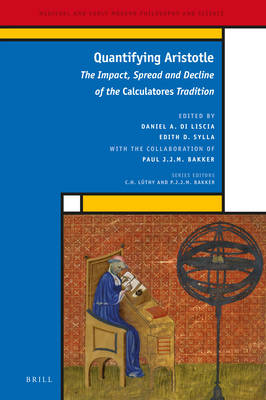
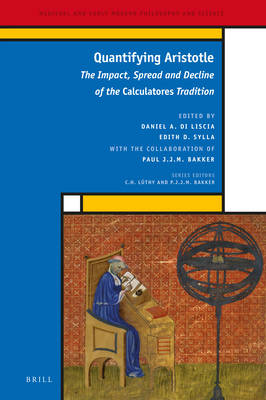
Quantifying Aristotle
The Impact, Spread and Decline of the Calculatores Tradition
€ 275,45
+ 550 punten
Omschrijving
Aristotelian philosophy is generally regarded as incompatible with the mathematical methods and principles that form the basis of modern science. This book offers an entirely new perspective on this presumed incompatibility. It surveys the tradition of the Oxford Calculators from its beginnings in the fourteenth century until Leibniz and the philosophy of the seventeenth century and explores how the Calculators' techniques of quantification expanded the conceptual and methodological limits of Aristotelianism. In the process, it examines a large number of authors, some of them never studied in this context. Exploring the relationship between various late medieval disciplines, the book sheds new light on the problem of continuity vs. discontinuity between scholasticism and modern science. Beyond its historiographical purpose, this book also hopes to be a source of inspiration for present-day philosophers of science.
Specificaties
Betrokkenen
- Uitgeverij:
Inhoud
- Aantal bladzijden:
- 492
- Taal:
- Engels
- Reeks:
- Reeksnummer:
- nr. 34
Eigenschappen
- Productcode (EAN):
- 9789004499829
- Verschijningsdatum:
- 2/06/2022
- Uitvoering:
- Hardcover
- Formaat:
- Genaaid
- Afmetingen:
- 160 mm x 264 mm
- Gewicht:
- 816 g

Alleen bij Standaard Boekhandel
+ 550 punten op je klantenkaart van Standaard Boekhandel
SOLDEN


Beoordelingen
We publiceren alleen reviews die voldoen aan de voorwaarden voor reviews. Bekijk onze voorwaarden voor reviews.