


- Afhalen na 1 uur in een winkel met voorraad
- Gratis thuislevering in België vanaf € 30
- Ruim aanbod met 7 miljoen producten
- Afhalen na 1 uur in een winkel met voorraad
- Gratis thuislevering in België vanaf € 30
- Ruim aanbod met 7 miljoen producten





€ 26,95
+ 53 punten
Omschrijving
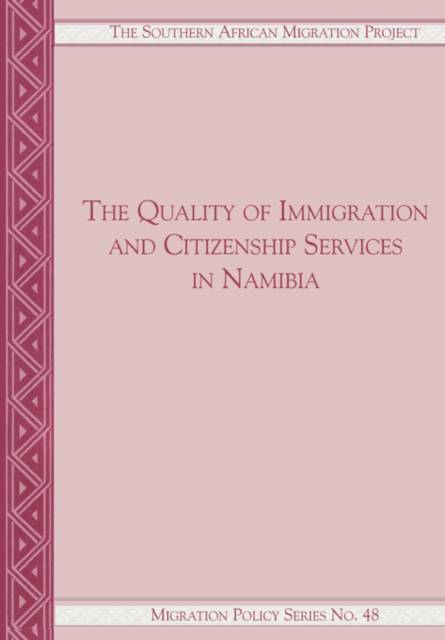
Namibia, like many other countries in the SADC region, is experiencing a major shift in internal and international migration patterns to and from the country. The management of these movements is posing particular challenges and problems. The government ministry responsible for management (the Ministry of Home Affairs and Immigration (MHAI)) has sole responsibility for implementing and managing migration policy and legislation. The Ministry also manages visa and permanent and temporary residence applications and approves work permits. At the same time, the Ministry provides a range of services for Namibian citizens and other legal residents: the registration of births, deaths and marriages; and the issuing of identity documents, passports and emergency travel documents The MHAI has the unfortunate reputation in Namibia of being one of the most inefficient ministries in the country. a Parliamentary Standing Committee was appointed in 2005 to look into the operation of the Ministry. The investigation has led to numerous actions by the Ministry to try and improve services. These included enhancing accessibility to services by creating mobile teams that were sent throughout the country to rural communities. Waiting times for ID and passport issue were also improved. Other efforts included full implementation of the Immigration Control Act, a fully computerized passport system and the computerization of other services. The MHAI committed itself to constantly reviewing delivery processes and adopting necessary changes, to a policy promoting zero tolerance of corruption and to achieving a reliable and effective human resource management system. The Southern African Migration Project (SAMP), at the request of the Ministry, conducted a systematic survey of the quality of services offered to citizens and non-citizens (the Services Quality Survey or SQS). The main objectives of the SQS were to compare the opinions of officials about the level and quality of services with those of the clients receiving these services; to identify the type of problems and delays that occur in the delivery of services in Namibia and why they occur; to determine the extent to which the level and quality of services provided meet the expectations of clients; and to develop a set of recommendations to improve the level and quality of service delivery. The project itself was an independently-funded and objective survey, and its findings are presented in this volume.
Specificaties
Betrokkenen
- Auteur(s):
- Uitgeverij:
Inhoud
- Aantal bladzijden:
- 48
- Taal:
- Engels
- Reeks:
Eigenschappen
- Productcode (EAN):
- 9781920118679
- Verschijningsdatum:
- 15/05/2008
- Uitvoering:
- Paperback
- Formaat:
- Trade paperback (VS)
- Afmetingen:
- 170 mm x 244 mm
- Gewicht:
- 90 g


Alleen bij Standaard Boekhandel
+ 53 punten op je klantenkaart van Standaard Boekhandel

Beoordelingen
We publiceren alleen reviews die voldoen aan de voorwaarden voor reviews. Bekijk onze voorwaarden voor reviews.