


- Afhalen na 1 uur in een winkel met voorraad
- Gratis thuislevering in België vanaf € 30
- Ruim aanbod met 7 miljoen producten
- Afhalen na 1 uur in een winkel met voorraad
- Gratis thuislevering in België vanaf € 30
- Ruim aanbod met 7 miljoen producten





€ 65,00
+ 130 punten
Eenvoudig bestellen
Veilig betalen


Gratis thuislevering vanaf € 30 (via bpost)
Gratis levering in je Standaard Boekhandel
Omschrijving
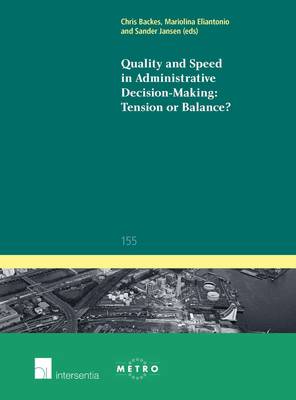
In various European countries such as France, Italy, and the Netherlands, lawmakers have adopted legislation in order to deal with the consequences of the economic crisis. These laws contain provisions aimed at speeding up administrative decision making and judicial proceedings which have an impact on various provisions of general administrative law. Alongside the aim of facing the economic crisis, these measures aim to make administrative law more up-to-date and ensure it meets the needs of contemporary society.However, acceleration measures concerning decision-making and judicial proceedings may clash with the need to preserve the quality of these proceedings. On the one hand, swift procedures can be considered to be one aspect of high-quality decision making. On the other hand, other aspects of quality such as public participation and the thorough consideration of all relevant aspects and interests, may be at risk when the speed of decision-making is the only focus of reforms.Quality and Speed in Administrative Decision-Making: Tension or Balance? presents six national perspectives on these issues, together with a comparative overview comparing and contrasting national approaches with regards to finding a balance between the pace of proceedings and the quality of administrative and judicial decisions.The book will be of interest to academics of European and comparative administrative law, as well as policy-makers at the national and European level.
Specificaties
Betrokkenen
- Auteur(s):
- Uitgeverij:
Inhoud
- Aantal bladzijden:
- 184
- Taal:
- Engels
- Reeks:
- Reeksnummer:
- nr. 155
Eigenschappen
- Productcode (EAN):
- 9781780684451
- Verschijningsdatum:
- 21/10/2016
- Uitvoering:
- Paperback
- Formaat:
- Trade paperback (VS)
- Afmetingen:
- 172 mm x 236 mm
- Gewicht:
- 371 g


Alleen bij Standaard Boekhandel
+ 130 punten op je klantenkaart van Standaard Boekhandel
CADEAU

AANGERADEN


Beoordelingen
We publiceren alleen reviews die voldoen aan de voorwaarden voor reviews. Bekijk onze voorwaarden voor reviews.