


- Afhalen na 1 uur in een winkel met voorraad
- Gratis thuislevering in België vanaf € 30
- Ruim aanbod met 7 miljoen producten
- Afhalen na 1 uur in een winkel met voorraad
- Gratis thuislevering in België vanaf € 30
- Ruim aanbod met 7 miljoen producten





€ 76,45
+ 152 punten
Omschrijving
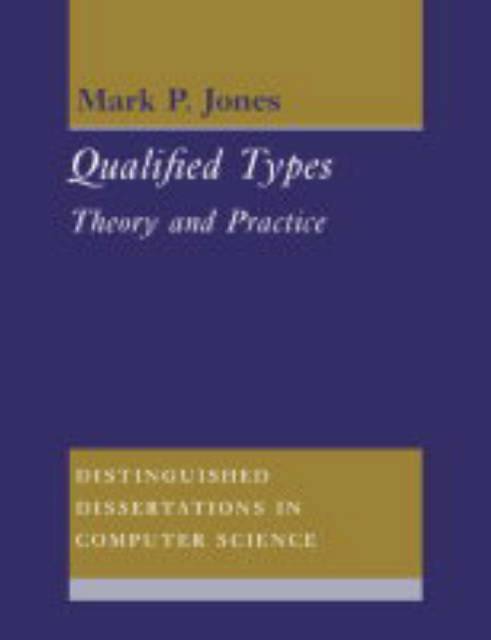
This book describes the use of qualified types to provide a general framework for the combination of polymorphism and overloading. For example, qualified types can be viewed as a generalization of type classes in the functional language Haskell and the theorem prover Isabelle. These in turn are extensions of equality types in Standard ML. Other applications of qualified types include extensible records and subtyping. Using a general formulation of qualified types, the author extends the Damas/Milner type inference algorithm to support qualified types, which in turn specifies the set of all possible types for any term. In addition, he describes a new technique for establishing suitable coherence conditions that guarantee the same semantics for all possible translations of a given term. Practical issues that arise in concrete implementations are also discussed, concentrating in particular on the implementation of overloading in Haskell and Gofer, a small functional programming system developed by the author.
Specificaties
Betrokkenen
- Auteur(s):
- Uitgeverij:
Inhoud
- Aantal bladzijden:
- 172
- Taal:
- Engels
- Reeks:
- Reeksnummer:
- nr. 9
Eigenschappen
- Productcode (EAN):
- 9780521543262
- Verschijningsdatum:
- 16/10/2003
- Uitvoering:
- Paperback
- Formaat:
- Trade paperback (VS)
- Afmetingen:
- 189 mm x 246 mm
- Gewicht:
- 317 g


Alleen bij Standaard Boekhandel
+ 152 punten op je klantenkaart van Standaard Boekhandel
Cadeau

AANGERADEN


Beoordelingen
We publiceren alleen reviews die voldoen aan de voorwaarden voor reviews. Bekijk onze voorwaarden voor reviews.