


- Afhalen na 1 uur in een winkel met voorraad
- Gratis thuislevering in België vanaf € 30
- Ruim aanbod met 7 miljoen producten
- Afhalen na 1 uur in een winkel met voorraad
- Gratis thuislevering in België vanaf € 30
- Ruim aanbod met 7 miljoen producten





Omschrijving
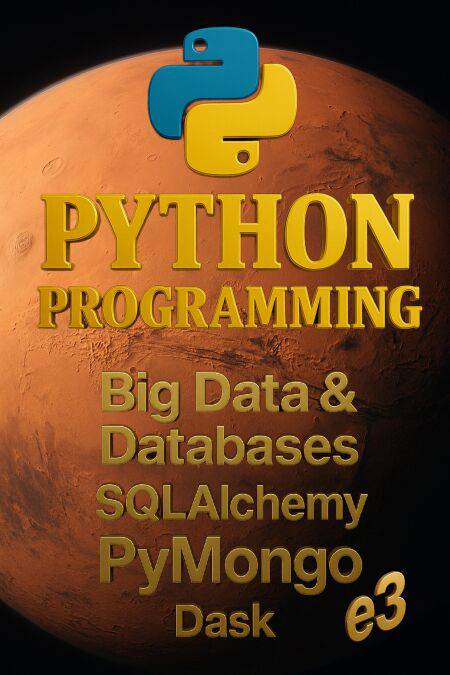
Preface In today's data-driven world, the boundaries between software engineering, data science, and database management have become increasingly blurred. Modern systems must handle massive volumes of data, integrate with diverse databases, and perform complex computations efficiently—all while maintaining clean, maintainable, and scalable code. Python Programming: Big Data & Databases is written to bridge these worlds, offering a clear and comprehensive guide to the technologies that power data-intensive applications in Python. This book explores four essential pillars of modern data engineering and analytics: Big Data processing, relational and non-relational databases, object-relational mapping (ORM), and parallel computation. Through practical examples, theoretical insights, and hands-on exercises, readers will gain both the conceptual understanding and the technical proficiency needed to design, build, and optimize data systems in Python. The journey begins with an overview of Big Data and database fundamentals, setting the stage for how Python interacts with structured and unstructured data in real-world scenarios. From there, we dive into SQLAlchemy, the powerful ORM framework that transforms relational database management into an elegant, Pythonic experience. Readers will learn how to model data declaratively, execute queries seamlessly, and maintain database integrity in scalable applications. Next, the book introduces PyMongo, the official MongoDB driver for Python, demonstrating how to work with document-oriented databases that thrive in dynamic and large-scale data environments. Topics such as CRUD operations, indexing, aggregation pipelines, and asynchronous data handling are explored with clarity and depth. Finally, the book concludes with Dask, a parallel computing library that extends Python's ecosystem into the world of distributed data processing. Here, readers will learn how to handle computations that exceed the limits of memory, accelerate data analytics workflows, and integrate seamlessly with tools like Pandas and NumPy—making Dask an invaluable tool for modern data pipelines. Whether you are a software developer, data engineer, database administrator, or researcher, this book is designed to serve as both a learning resource and a long-term reference. Its approach emphasizes not just how to use these tools, but why they matter—focusing on design principles, performance considerations, and best practices that stand the test of time. By the end of this book, you will have gained a deep understanding of how Python interfaces with databases, manages data at scale, and performs high-performance computations in distributed environments. More importantly, you will be equipped to build systems that can adapt and grow with the ever-expanding demands of the data-driven era. Welcome to the world of Python, Big Data, and Databases—where performance meets simplicity, and where data becomes the foundation of intelligent design. - The Author


Alleen bij Standaard Boekhandel
+ 34 punten op je klantenkaart van Standaard Boekhandel
Cadeau

AANGERADEN


Beoordelingen
We publiceren alleen reviews die voldoen aan de voorwaarden voor reviews. Bekijk onze voorwaarden voor reviews.