


- Afhalen na 1 uur in een winkel met voorraad
- Gratis thuislevering in België vanaf € 30
- Ruim aanbod met 7 miljoen producten
- Afhalen na 1 uur in een winkel met voorraad
- Gratis thuislevering in België vanaf € 30
- Ruim aanbod met 7 miljoen producten





Omschrijving
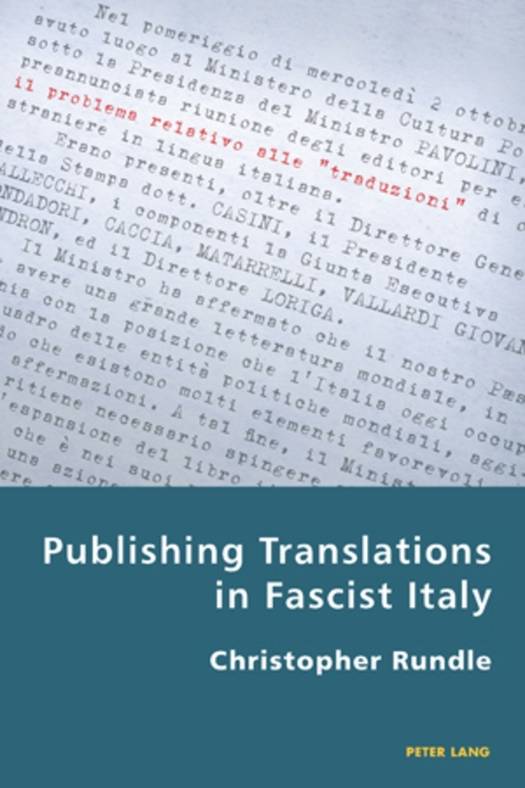
In the 1930s translation became a key issue in the cultural politics of the Fascist regime due to the fact that Italy was publishing more translations than any other country in the world. Making use of extensive archival research, the author of this new study examines this 'invasion of translations' through a detailed statistical analysis of the translation market. The book shows how translations appeared to challenge official claims about the birth of a Fascist culture and cast Italy in a receptive role that did not tally with Fascist notions of a dominant culture extending its influence abroad. The author shows further that the commercial impact of this invasion provoked a sustained reaction against translated popular literature on the part of those writers and intellectuals who felt threatened by its success. He examines the aggressive campaign that was conducted against the Italian Publishers Federation by the Authors and Writers Union (led by the Futurist poet F. T. Marinetti), accusing them of favouring their private profit over the national interest. Finally, the author traces the evolution of Fascist censorship, showing how the regime developed a gradually more repressive policy towards translations as notions of cultural purity began to influence the perception of imported literature.
Specificaties
Betrokkenen
- Auteur(s):
- Uitgeverij:
Inhoud
- Aantal bladzijden:
- 256
- Taal:
- Engels
- Reeks:
- Reeksnummer:
- nr. 6
Eigenschappen
- Productcode (EAN):
- 9783039118311
- Verschijningsdatum:
- 6/08/2010
- Uitvoering:
- Paperback
- Formaat:
- Trade paperback (VS)
- Afmetingen:
- 147 mm x 224 mm
- Gewicht:
- 385 g



Alleen bij Standaard Boekhandel
+ 284 punten op je klantenkaart van Standaard Boekhandel

Beoordelingen
We publiceren alleen reviews die voldoen aan de voorwaarden voor reviews. Bekijk onze voorwaarden voor reviews.