


- Afhalen na 1 uur in een winkel met voorraad
- Gratis thuislevering in België vanaf € 30
- Ruim aanbod met 7 miljoen producten
- Afhalen na 1 uur in een winkel met voorraad
- Gratis thuislevering in België vanaf € 30
- Ruim aanbod met 7 miljoen producten





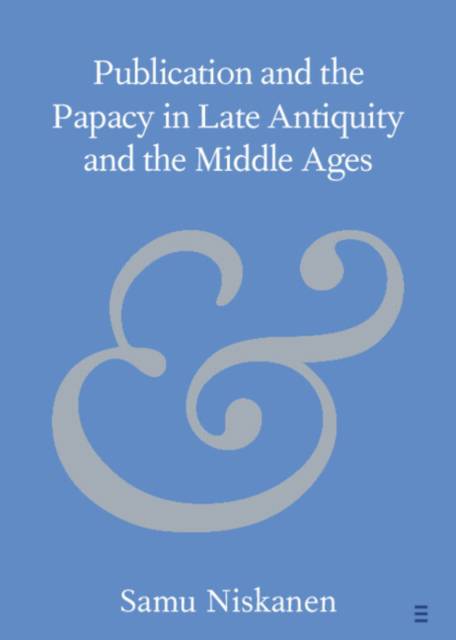
Publication and the Papacy in Late Antiquity and the Middle Ages
Samu Niskanen
€ 27,45
+ 54 punten
Omschrijving
This Element explores the papacy's engagement in authorial publishing in late antiquity and the Middle Ages. The opening discussion demonstrates that throughout the medieval period, papal involvement in the publication of new works was a phenomenon, which surged in the eleventh century. The efforts by four authors to use their papal connexions in the interests of publicity are examined as case studies. The first two are St Jerome and Arator, late antique writers who became highly influential partly due to their declaration that their literary projects enjoyed papal sanction. Appreciation of their publication strategies sets the scene for a comparison with two eleventh-century authors, Fulcoius of Beauvais and St Anselm. This Element argues that papal involvement in publication constituted a powerful promotional technique. It is a hermeneutic that brings insights into both the aspirations and concerns of medieval authors. This title is also available as Open Access on Cambridge Core.
Specificaties
Betrokkenen
- Auteur(s):
- Uitgeverij:
Inhoud
- Aantal bladzijden:
- 106
- Taal:
- Engels
- Reeks:
Eigenschappen
- Productcode (EAN):
- 9781009111089
- Verschijningsdatum:
- 20/01/2022
- Uitvoering:
- Paperback
- Formaat:
- Trade paperback (VS)
- Afmetingen:
- 127 mm x 178 mm
- Gewicht:
- 99 g


Alleen bij Standaard Boekhandel
+ 54 punten op je klantenkaart van Standaard Boekhandel
Cadeau

AANGERADEN


Beoordelingen
We publiceren alleen reviews die voldoen aan de voorwaarden voor reviews. Bekijk onze voorwaarden voor reviews.