


- Afhalen na 1 uur in een winkel met voorraad
- Gratis thuislevering in België vanaf € 30
- Ruim aanbod met 7 miljoen producten
- Afhalen na 1 uur in een winkel met voorraad
- Gratis thuislevering in België vanaf € 30
- Ruim aanbod met 7 miljoen producten





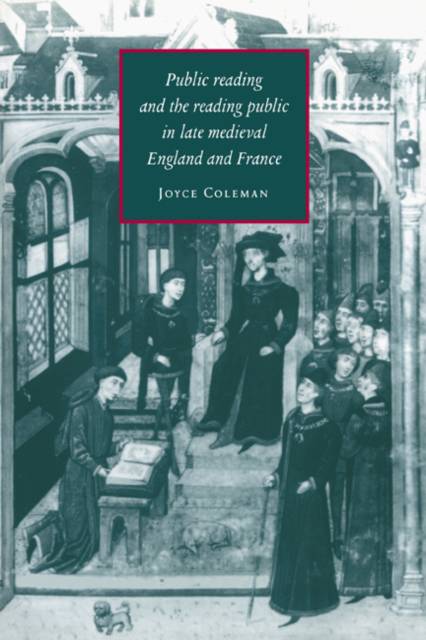
Public Reading and the Reading Public in Late Medieval England and France
Joyce Coleman
€ 98,45
+ 196 punten
Omschrijving
For a long time scholars have generally shared the belief that late medieval authors - particularly in England and especially Chaucer - wrote for private readers. This book challenges that view and current orthodoxies in orality-literacy theory. It assembles and analyses in depth, for the first time, an overwhelming mass of evidence that in both Britain and France from the mid-fourteenth to the late-fifteenth century, literate, elite audiences continued to prefer public reading (aloud in groups) to private reading. This book offers the first sustained critique of Walter Ong's Orality and Literacy (1982), which has encouraged medievalists to underestimate the nature and role of late medieval public reading. Using an 'ethnographic' methodology, Joyce Coleman develops several schema from the data and applies them in analyses of texts including historical records, works by Chaucer and other writings into the late-fifteenth century.
Specificaties
Betrokkenen
- Auteur(s):
- Uitgeverij:
Inhoud
- Aantal bladzijden:
- 280
- Taal:
- Engels
- Reeks:
- Reeksnummer:
- nr. 26
Eigenschappen
- Productcode (EAN):
- 9780521673518
- Verschijningsdatum:
- 30/06/2005
- Uitvoering:
- Paperback
- Formaat:
- Trade paperback (VS)
- Afmetingen:
- 152 mm x 229 mm
- Gewicht:
- 412 g


Alleen bij Standaard Boekhandel
+ 196 punten op je klantenkaart van Standaard Boekhandel
Cadeau

AANGERADEN


Beoordelingen
We publiceren alleen reviews die voldoen aan de voorwaarden voor reviews. Bekijk onze voorwaarden voor reviews.