


- Afhalen na 1 uur in een winkel met voorraad
- Gratis thuislevering in België vanaf € 30
- Ruim aanbod met 7 miljoen producten
- Afhalen na 1 uur in een winkel met voorraad
- Gratis thuislevering in België vanaf € 30
- Ruim aanbod met 7 miljoen producten





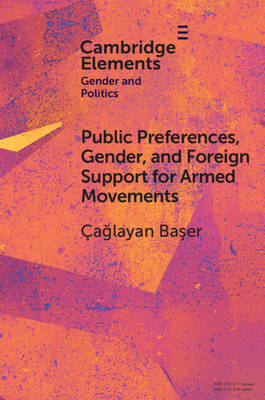
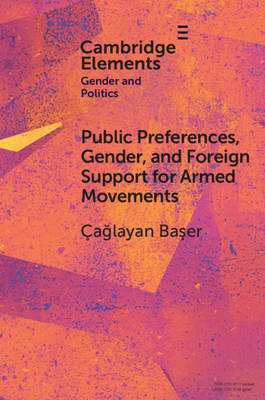
Public Preferences, Gender, and Foreign Support for Armed Movements
Çağlayan Başer
€ 36,45
+ 72 punten
Uitvoering
Omschrijving
Female combatants are often central to rebel groups' outreach strategies, yet their impact on foreign support remains unclear. This Element examines how the presence of female fighters shapes international perceptions and support, drawing on original survey experiments in the United States and Tunisia as well as cross-national observational data. The findings demonstrate that foreign audiences are more likely to endorse government sponsorship of rebel groups with female combatants, perceiving them as more gender-equal, democratic, morally legitimate, and as less likely to harm civilians, even when they are agents of political violence. These favorable perceptions, in turn, increase the likelihood that democratic states will offer material support. In addition to establishing gender composition as a factor influencing external support in armed conflicts, this Element contributes to broader debates on the gender equality-peace nexus, humanitarian aid, rebel legitimacy, and gender stereotypes in nontraditional political spheres.
Specificaties
Betrokkenen
- Auteur(s):
- Uitgeverij:
Inhoud
- Aantal bladzijden:
- 118
- Taal:
- Engels
- Reeks:
Eigenschappen
- Productcode (EAN):
- 9781009407045
- Verschijningsdatum:
- 5/02/2026
- Uitvoering:
- Paperback
- Formaat:
- Trade paperback (VS)
- Afmetingen:
- 152 mm x 229 mm
- Gewicht:
- 167 g


Alleen bij Standaard Boekhandel
+ 72 punten op je klantenkaart van Standaard Boekhandel
Cadeau

AANGERADEN


Beoordelingen
We publiceren alleen reviews die voldoen aan de voorwaarden voor reviews. Bekijk onze voorwaarden voor reviews.