


- Afhalen na 1 uur in een winkel met voorraad
- Gratis thuislevering in België vanaf € 30
- Ruim aanbod met 7 miljoen producten
- Afhalen na 1 uur in een winkel met voorraad
- Gratis thuislevering in België vanaf € 30
- Ruim aanbod met 7 miljoen producten





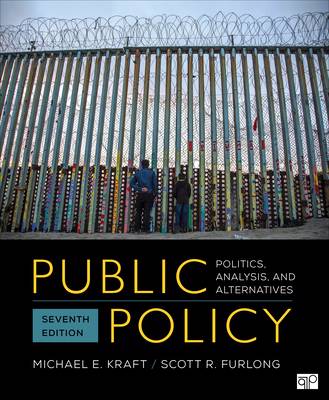
Public Policy
Politics, Analysis, and Alternatives
Michael E Kraft, Scott R Furlong
Paperback | Engels
€ 139,95
+ 279 punten
Omschrijving
With the right information, we can develop public policies that work better.
All too often, public policy textbooks offer a basic grounding in the policy process without the benefit of integrating the use of policy analysis. Michael E. Kraft and Scott R. Furlong take a different tack.
Public Policy: Politics, Analysis, and Alternatives, Seventh Edition helps students understand how and why policy analysis is used to assess policy alternatives. The text encourages them to not only question the assumptions of policy analyst, but also recognize how these strategies are used in the support of political arguments. The authors introduce and fully integrate an evaluative approach to policy to encourage critical and creative thinking on issues ranging from health care to climate change. From a concise review of institutions, policy actors, and major theoretical models to a discussion of the nature of policy analysis and its practice, Kraft and Furlong show students how to employ evaluative criteria in six substantive policy areas. Students come away with the analytic tools they need to understand that the motivations of policy actors--both within and outside of government--influence a complex yet comprehensible policy agenda.
All too often, public policy textbooks offer a basic grounding in the policy process without the benefit of integrating the use of policy analysis. Michael E. Kraft and Scott R. Furlong take a different tack.
Public Policy: Politics, Analysis, and Alternatives, Seventh Edition helps students understand how and why policy analysis is used to assess policy alternatives. The text encourages them to not only question the assumptions of policy analyst, but also recognize how these strategies are used in the support of political arguments. The authors introduce and fully integrate an evaluative approach to policy to encourage critical and creative thinking on issues ranging from health care to climate change. From a concise review of institutions, policy actors, and major theoretical models to a discussion of the nature of policy analysis and its practice, Kraft and Furlong show students how to employ evaluative criteria in six substantive policy areas. Students come away with the analytic tools they need to understand that the motivations of policy actors--both within and outside of government--influence a complex yet comprehensible policy agenda.
Specificaties
Betrokkenen
- Auteur(s):
- Uitgeverij:
Inhoud
- Aantal bladzijden:
- 544
- Taal:
- Engels
Eigenschappen
- Productcode (EAN):
- 9781544374611
- Verschijningsdatum:
- 28/01/2020
- Uitvoering:
- Paperback
- Formaat:
- Trade paperback (VS)
- Afmetingen:
- 190 mm x 231 mm
- Gewicht:
- 929 g


Alleen bij Standaard Boekhandel
+ 279 punten op je klantenkaart van Standaard Boekhandel

Beoordelingen
We publiceren alleen reviews die voldoen aan de voorwaarden voor reviews. Bekijk onze voorwaarden voor reviews.