


- Afhalen na 1 uur in een winkel met voorraad
- Gratis thuislevering in België vanaf € 30
- Ruim aanbod met 7 miljoen producten
- Afhalen na 1 uur in een winkel met voorraad
- Gratis thuislevering in België vanaf € 30
- Ruim aanbod met 7 miljoen producten





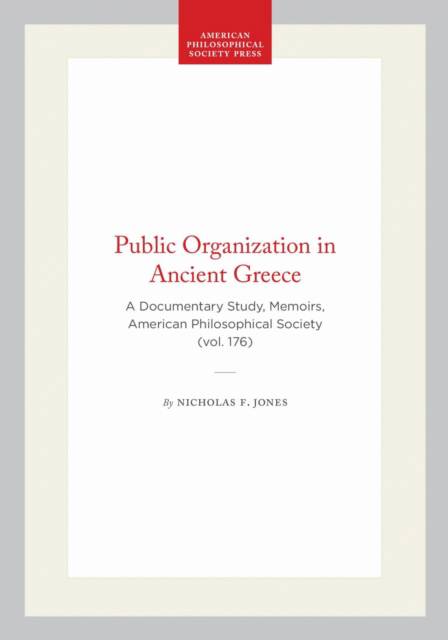
Public Organization in Ancient Greece
A Documentary Study, Memoirs, American Philosophical Society (Vol. 176)
Nicholas F Jones
€ 115,45
+ 230 punten
Omschrijving
Ancient Greek city-states typically administered themselves through more or less permanent divisions of their populations or territories. The Athenian system of phylai ("tribes"), trittyes ("Thirds") & demes ("villages") is the familiar example, but something is known of the arrangements of about 200 other states representing all regions of the Greek world. Drawing upon the predominantly epigraphic record, Dr. Jones provides the first comprehensive analysis, arranged on a state-by-state basis, of these organizations. The book documents the widespread tendency of the public units, quite apart from their state-wide administrative roles, to be organized internally as self-sustaining associations. Constituting a public social organization, these "new communities" addressed the problem of the persistence within the state of inherited regional or political pluralism. Precisely because of their artificiality, the public associations offered an innocuous alternative to the old, divisive loyalties. Thereby a degree of stability might be secured for these often deeply fragmented societies.
Specificaties
Betrokkenen
- Auteur(s):
- Uitgeverij:
Inhoud
- Aantal bladzijden:
- 403
- Taal:
- Engels
- Reeks:
Eigenschappen
- Productcode (EAN):
- 9780871691767
- Verschijningsdatum:
- 1/01/1987
- Uitvoering:
- Hardcover
- Formaat:
- Genaaid
- Afmetingen:
- 178 mm x 254 mm
- Gewicht:
- 957 g



Alleen bij Standaard Boekhandel
+ 230 punten op je klantenkaart van Standaard Boekhandel
Cadeau

AANGERADEN


Beoordelingen
We publiceren alleen reviews die voldoen aan de voorwaarden voor reviews. Bekijk onze voorwaarden voor reviews.