


- Afhalen na 1 uur in een winkel met voorraad
- Gratis thuislevering in België vanaf € 30
- Ruim aanbod met 7 miljoen producten
- Afhalen na 1 uur in een winkel met voorraad
- Gratis thuislevering in België vanaf € 30
- Ruim aanbod met 7 miljoen producten





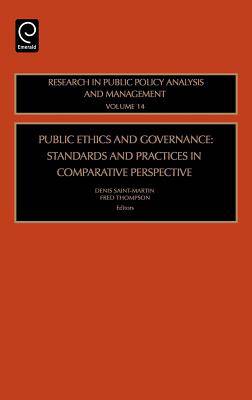
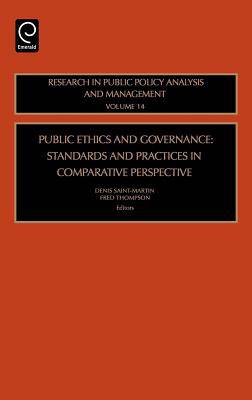
Public Ethics and Governance
Standards and Practices in Comparative Perspective
€ 241,95
+ 483 punten
Omschrijving
This important volume looks at conflicts of interest, codes of ethics, and the regulation of corruption in the United States, Canada, the United Kingdom, Australia, and the European Community. It finds that there is less corruption than ever before, but the gap between public expectations and perceptions has nevertheless widened. Moreover, it questions the dominant academic approach to applied ethics, with its emphasis on training, standards and procedures, and, ultimately, regulation. In contrast, the authors featured in this volume argue that governance is a social process. Ethical governing means attending to the relational aftermath of complex decisions - the ways in which decisions and their execution affect and sustain social relationships. Moreover, applied ethical reasoning in this context must not only confront certain stock issues, but must also lead to widespread participation in decision making processes. Viewed in this way, ethical governing means a respectful discourse involving widespread participation of legitimate viewpoints. Consequently, the authors suggest that the nearly universal dissatisfaction with the state of public ethics is a manifestation of something deeper and more profound. As one author explains, public perceptions won't look up so long as politics remains a spectator sport, dominated by 'sleaze ball tactics and shrinking sound bites'.
Specificaties
Betrokkenen
- Uitgeverij:
Inhoud
- Aantal bladzijden:
- 300
- Taal:
- Engels
- Reeks:
- Reeksnummer:
- nr. 14
Eigenschappen
- Productcode (EAN):
- 9780762312269
- Verschijningsdatum:
- 17/02/2006
- Uitvoering:
- Hardcover
- Formaat:
- Genaaid
- Afmetingen:
- 160 mm x 230 mm
- Gewicht:
- 553 g

Alleen bij Standaard Boekhandel
+ 483 punten op je klantenkaart van Standaard Boekhandel
AANGERADEN


Beoordelingen
We publiceren alleen reviews die voldoen aan de voorwaarden voor reviews. Bekijk onze voorwaarden voor reviews.