


- Afhalen na 1 uur in een winkel met voorraad
- Gratis thuislevering in België vanaf € 30
- Ruim aanbod met 7 miljoen producten
- Afhalen na 1 uur in een winkel met voorraad
- Gratis thuislevering in België vanaf € 30
- Ruim aanbod met 7 miljoen producten





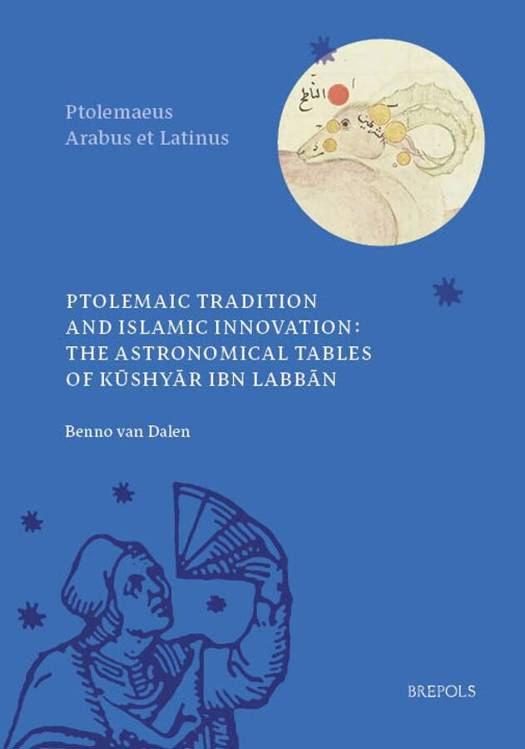
Ptolemaic Tradition and Islamic Innovation: The Astronomical Tables of Kūshyār ibn Labbān
Kūshyār ibn Labbān al-Jīlī, Benno van Dalen
€ 127,20
+ 254 punten
Omschrijving
The Jāmi' Zīj (Comprehensive Zīj) was a highly popular Arabic astronomical handbook with tables written by the Iranian astronomer Kūshyār ibn Labbān al-Jīlī around the year 1000. It belonged to an important category of works, modelled after Ptolemy's Almagest and Handy Tables, that allowed the practising astronomer/astrologer to carry out all necessary calculations of arcs on the heavenly sphere and planetary positions, and ultimately to cast horoscopes. Around one hundred such works are extant, but only very few have been edited, translated or studied in detail. This book contains a full treatment of Book II of Kūshyār's astronomical handbook centred around a critical edition of all the mathematical tables and their paratexts. It sets new standards for the edition of such tables by designing new types of apparatus entries for related variants in the tabular values. The introductory part describes the eight surviving manuscripts that transmit Kūshyār's tables and establishes by a detailed survey that they represent at least three different versions of the Jāmi' Zīj that in all likelihood stem from Kūshyār himself. An extensive commentary with mathematical analyses uncovers numerous new details of the methods by which the tables were computed, the astronomical parameter values on which they were based, the sources for the tables, and their influence on later zījes. These results show how Kūshyār, on the one hand, stayed firmly within the framework of the Ptolemaic tradition, but on the other introduced several types of innovations that later became common in Arabic and Persian astronomical handbooks.
Specificaties
Betrokkenen
- Auteur(s):
- Uitgeverij:
Inhoud
- Aantal bladzijden:
- 632
- Taal:
- Frans
- Reeks:
- Reeksnummer:
- nr. 2
Eigenschappen
- Productcode (EAN):
- 9782503593418
- Verschijningsdatum:
- 11/01/2022
- Uitvoering:
- Hardcover
- Formaat:
- Genaaid
- Afmetingen:
- 186 mm x 260 mm
- Gewicht:
- 1696 g



Alleen bij Standaard Boekhandel
+ 254 punten op je klantenkaart van Standaard Boekhandel
Cadeau

AANGERADEN


Beoordelingen
We publiceren alleen reviews die voldoen aan de voorwaarden voor reviews. Bekijk onze voorwaarden voor reviews.