


- Afhalen na 1 uur in een winkel met voorraad
- Gratis thuislevering in België vanaf € 30
- Ruim aanbod met 7 miljoen producten
- Afhalen na 1 uur in een winkel met voorraad
- Gratis thuislevering in België vanaf € 30
- Ruim aanbod met 7 miljoen producten





€ 71,95
+ 143 punten
Omschrijving
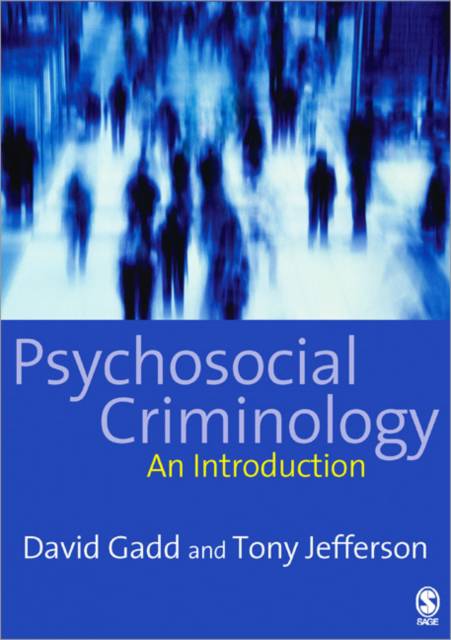
Psychosocial Criminology demonstrates how a psychosocial approach can illuminate the causes of particular crimes, challenging readers to re-think the similarities and differences between themselves and those involved in crime.
The book critiques existing psychological and sociological theories before outlining a more adequate understanding of the criminal offender. It sheds new light on a series of crimes--rape, serial murder, racial harassment, ′jack-rolling′ (mugging of drunks), domestic violence--and contemporary criminological issues such as fear of crime, cognitive-behavioral interventions and restorative justice.
Authors David Gadd and Tony Jefferson bring together theories about identity, subjectivity, and gender to provide the first comprehensive account of their psychoanalytically inspired approach. For each topic, the theoretical perspective is supported by individual case studies, which are designed to facilitate the understanding of theory and to demonstrate its application to a variety of criminological topics.
This important and lucid book is written primarily for advanced undergraduate and graduate students, as well as teachers of criminology. It is particularly useful for students undertaking a joint degree in criminology and psychology. It also appeals to critical psychologists, psychoanalysts, students of biographical methods, and those pursuing social work training.
The book critiques existing psychological and sociological theories before outlining a more adequate understanding of the criminal offender. It sheds new light on a series of crimes--rape, serial murder, racial harassment, ′jack-rolling′ (mugging of drunks), domestic violence--and contemporary criminological issues such as fear of crime, cognitive-behavioral interventions and restorative justice.
Authors David Gadd and Tony Jefferson bring together theories about identity, subjectivity, and gender to provide the first comprehensive account of their psychoanalytically inspired approach. For each topic, the theoretical perspective is supported by individual case studies, which are designed to facilitate the understanding of theory and to demonstrate its application to a variety of criminological topics.
This important and lucid book is written primarily for advanced undergraduate and graduate students, as well as teachers of criminology. It is particularly useful for students undertaking a joint degree in criminology and psychology. It also appeals to critical psychologists, psychoanalysts, students of biographical methods, and those pursuing social work training.
Specificaties
Betrokkenen
- Auteur(s):
- Uitgeverij:
Inhoud
- Aantal bladzijden:
- 216
- Taal:
- Engels
Eigenschappen
- Productcode (EAN):
- 9781412900799
- Verschijningsdatum:
- 15/10/2007
- Uitvoering:
- Paperback
- Formaat:
- Trade paperback (VS)
- Afmetingen:
- 171 mm x 240 mm
- Gewicht:
- 367 g


Alleen bij Standaard Boekhandel
+ 143 punten op je klantenkaart van Standaard Boekhandel
Cadeau

AANGERADEN


Beoordelingen
We publiceren alleen reviews die voldoen aan de voorwaarden voor reviews. Bekijk onze voorwaarden voor reviews.