


- Afhalen na 1 uur in een winkel met voorraad
- Gratis thuislevering in België vanaf € 30
- Ruim aanbod met 7 miljoen producten
- Afhalen na 1 uur in een winkel met voorraad
- Gratis thuislevering in België vanaf € 30
- Ruim aanbod met 7 miljoen producten





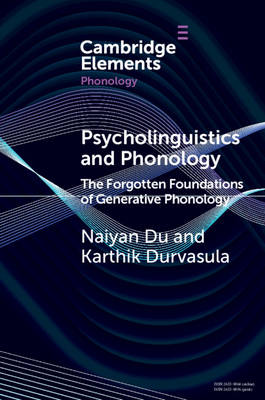
Psycholinguistics and Phonology
The Forgotten Foundations of Generative Phonology
Naiyan Du, Karthik Durvasula
€ 33,45
+ 66 punten
Uitvoering
Omschrijving
Research over the last few decades has consistently questioned the sufficiency of abstract/ discrete phonological representations based on putative misalignments between predictions from such representations and observed experimental results. The authors first suggest that many of the arguments ride on misunderstandings of the original claims from generative phonology, and that the typical evidence furnished is consistent with those claims. They then focus in on the phenomenon of incomplete neutralisation and show that it is consistent with the classic generative phonology view. The authors further point out that extant accounts of the phenomenon do not achieve important desiderata and typically do not provide an explanation for either the phenomenon itself, or why there are actually at least two different kinds of incomplete neutralisation that don't stem from task confounds. Finally, they present new experimental data and explain that the phenomenon is an outcome of planning using abstract/discrete phonological knowledge.
Specificaties
Betrokkenen
- Auteur(s):
- Uitgeverij:
Inhoud
- Aantal bladzijden:
- 96
- Taal:
- Engels
- Reeks:
Eigenschappen
- Productcode (EAN):
- 9781009347624
- Verschijningsdatum:
- 20/02/2025
- Uitvoering:
- Paperback
- Formaat:
- Trade paperback (VS)
- Afmetingen:
- 152 mm x 229 mm
- Gewicht:
- 140 g


Alleen bij Standaard Boekhandel
+ 66 punten op je klantenkaart van Standaard Boekhandel
AANGERADEN


Beoordelingen
We publiceren alleen reviews die voldoen aan de voorwaarden voor reviews. Bekijk onze voorwaarden voor reviews.