


- Afhalen na 1 uur in een winkel met voorraad
- Gratis thuislevering in België vanaf € 30
- Ruim aanbod met 7 miljoen producten
- Afhalen na 1 uur in een winkel met voorraad
- Gratis thuislevering in België vanaf € 30
- Ruim aanbod met 7 miljoen producten





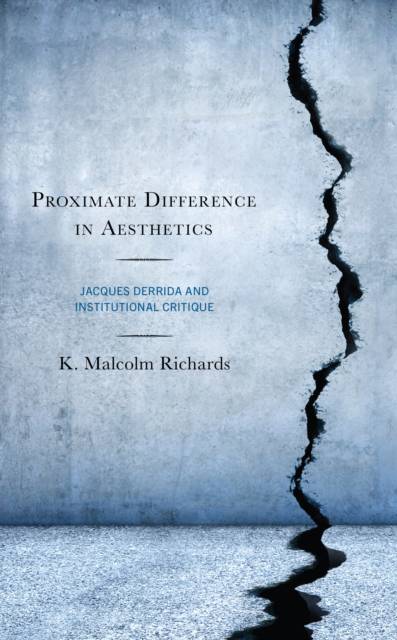
Proximate Difference in Aesthetics
Jacques Derrida and Institutional Critique
K Malcolm Richards
Hardcover | Engels
€ 195,45
+ 390 punten
Omschrijving
Proximate Difference in Aesthetics: Jacques Derrida and Institutional Critique examines interconnections between the texts of Jacques Derrida and works related to Institutional Critique in art. At a juncture between philosophy and art, texts by Derrida such as "Différance," "Parergon," "Economimesis," and "Force of Law," and works by Marcel Broodthaers, Michael Asher, Mierle Laderman Ukeles, Fred Wilson, Louise Lawler, Andrea Fraser, Maria Eichhorn, and Cameron Rowland reveal shared investments in questions around the archive, the institutional frames for art, and the collision of aesthetics, economics, and the law. These juxtapositions lead to insights not only into the relevance of Derrida's work to contemporary aesthetics, but also into how the approaches of Institutional Critique offer a way of thinking through issues raised by Derrida's texts. In being against traditional aesthetics, Derrida and the artists under consideration brush up against the foundational premises of the institutions of philosophy, aesthetics, and art, creating productive frictions that expose not only the foundational fictions and premises of their respective fields, but also an alternative means of approaching philosophy, art, and aesthetics. The small differences that Derrida and these artists open up through their practice radically reframe ways of thinking about their respective institutions, fields, and traditions.
Specificaties
Betrokkenen
- Auteur(s):
- Uitgeverij:
Inhoud
- Aantal bladzijden:
- 272
- Taal:
- Engels
Eigenschappen
- Productcode (EAN):
- 9781793624628
- Verschijningsdatum:
- 12/09/2023
- Uitvoering:
- Hardcover
- Formaat:
- Genaaid
- Afmetingen:
- 152 mm x 229 mm
- Gewicht:
- 566 g


Alleen bij Standaard Boekhandel
+ 390 punten op je klantenkaart van Standaard Boekhandel
Cadeau

AANGERADEN


Beoordelingen
We publiceren alleen reviews die voldoen aan de voorwaarden voor reviews. Bekijk onze voorwaarden voor reviews.